
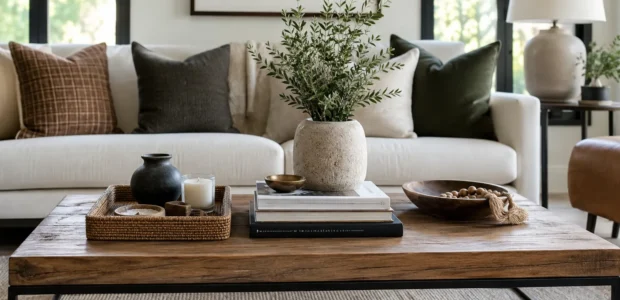

Almost everyone owns a coffee table, but almost nobody actually styles one. Most tables end up as a landing zone for remotes, mail, and whatever got carried in from the car that day. There’s a real gap between that and the kind of coffee table you see in a design magazine, perfectly balanced, a little curated, somehow still functional. The good news is that gap has almost nothing to do with natural talent. It comes down to a handful of repeatable rules that any designer relies on every single time.
Let’s walk through the actual techniques behind great coffee table styling, so you can bring a bit of that same intention into your own living room.
Start With the Right Size and Height
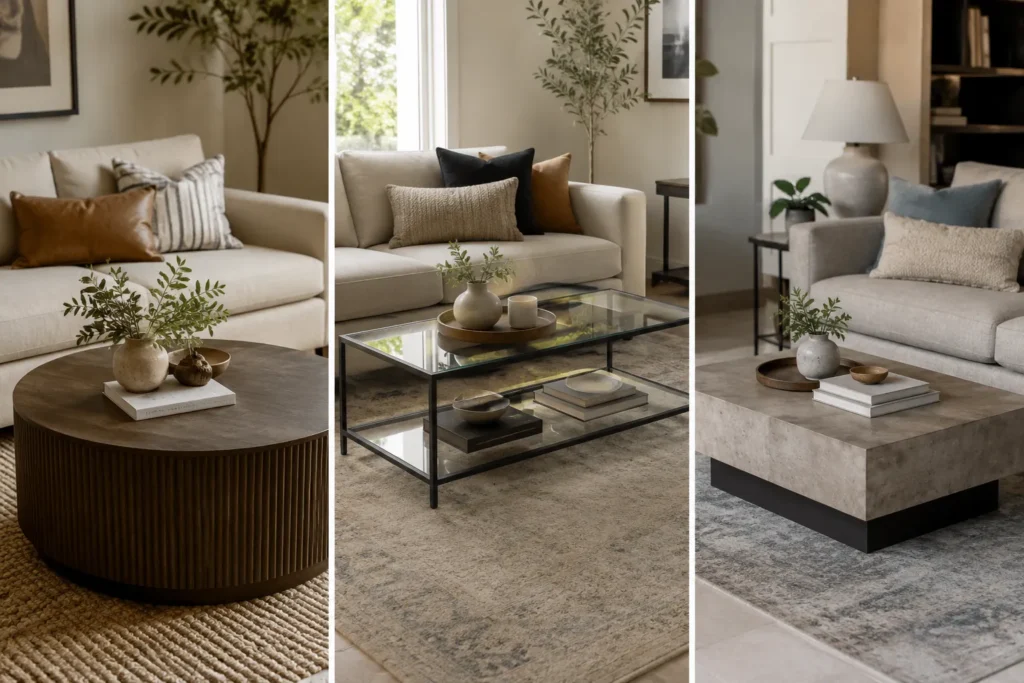
Before a single object goes on the table, the table itself needs to fit the room. Designers generally follow a simple ratio here, your coffee table should be roughly half to two thirds the length of your sofa. Too small and it looks lost, too large and it crowds the whole seating area.
Height matters just as much. Aim for your table to sit roughly level with your seat cushions, not towering above them, not sitting so low it feels awkward to reach. Getting this foundation right matters more than any decor choice that comes after it, since the wrong size table undermines even the best styling.
The Rule of Three: The Core of Coffee Table Styling
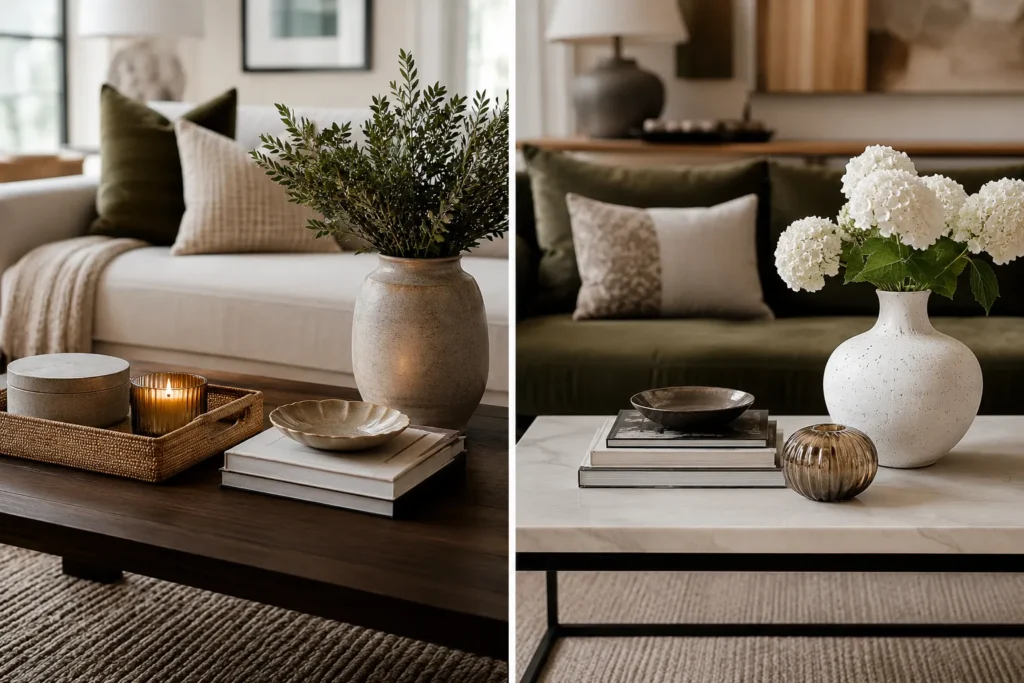
If there’s one formula worth memorizing, it’s this one. Group three items together, each varying in height, shape, and texture, and the whole arrangement instantly reads as intentional rather than random. A classic combo looks something like a low tray, a medium stack of books, and something taller like a vase or a small sculpture.
Odd numbers consistently look more natural to the eye than even ones, which is why you’ll see this rule of three repeated across nearly every kind of coffee table design, whether the room is minimalist or maximalist.
Use a Tray as Your Anchor
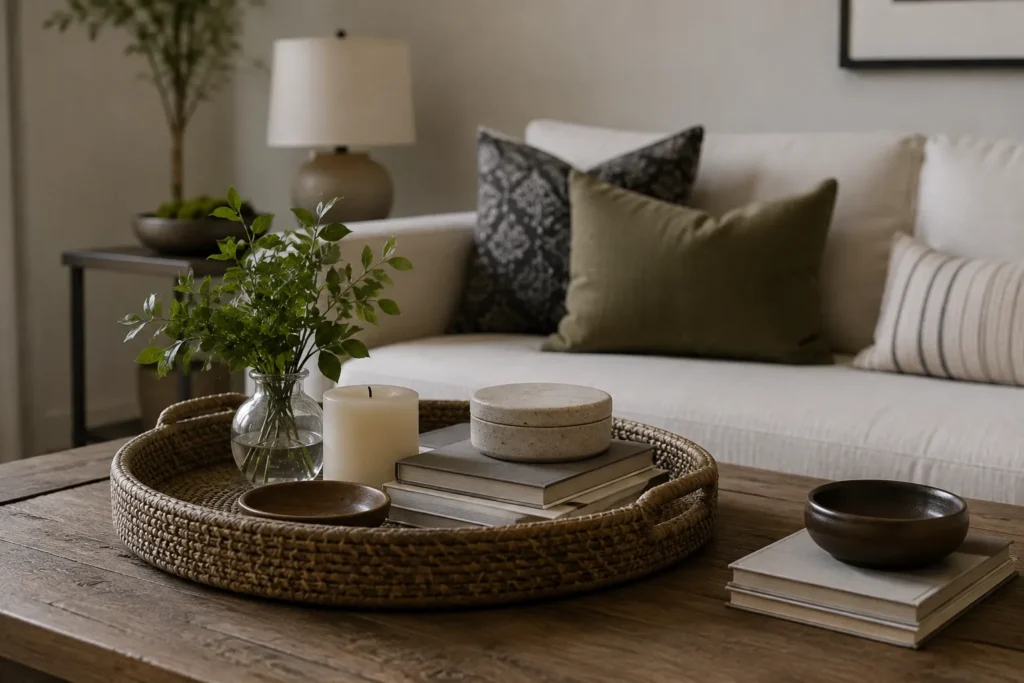
A tray does more work than people expect. It instantly organizes smaller items and keeps the surface from feeling scattered, giving even a handful of mismatched objects a clear sense of boundary. On a smaller table, one large tray usually does the job. On a bigger rectangular table, two smaller trays can effectively split the surface into zones, one for decor, one left open for actual use.
Stack Books for Instant Height and Personality
Book stacks are one of the easiest ways to add both height and personality at once. Reach for large format hardcovers, ideally at least 10 by 12 inches, and stack them largest to smallest for a stable, pedestal like base. Paperbacks tend to look flimsy here, so save those for a bookshelf instead.
Once your stack is in place, top it with something small, a candle, a mini sculpture, or a little dish works well. Varying the orientation of your stacks across the table adds a nice sense of rhythm, keeping coffee table decoration ideas from feeling repetitive or flat.
Mix Materials and Shapes for Visual Contrast
Contrast is what separates a styled table from a matched set. Pair round shapes against rectangular ones, place smooth ceramic beside something woven or textured, and let a bit of soft greenery sit near something solid like stone or wood. This kind of contrast shows up constantly in modern coffee table designs specifically, since flat, matching textures tend to read as generic rather than curated.
Leave Room to Breathe
It’s tempting to keep adding pieces once things start looking good, but restraint matters here. Aim to leave roughly 30 percent of the table as open, negative space. A table that’s too full loses that designed feeling and starts drifting back toward clutter, which is exactly what we’re trying to avoid.
Function still counts too, especially in a living room that actually gets used daily. Leave enough open surface for a coffee cup, the remote, or a board game night with the family, rather than styling purely for photos.
Let the Table Reflect the Room’s Materials
Take your cues from the coffee table itself, whether it’s wood, stone, glass, or metal, and let that inform your styling choices. Rectangular tables generally suit a more structured, balanced layout, while round or oval tables lend themselves to softer, slightly asymmetrical groupings. Good coffee table style ideas were never one size fits all, they respond to the piece you’re actually working with.
Once you’ve got a styling plan in mind, sourcing high-quality trays, vases, and brass accents is easy when you save with a west elm promo code. Beyond high-end modern retailers, sites like The Home Gardenist regularly features discounts, coupons, and savings on home decor from stores like Home Depot and Walmart, both of which carry a surprising range of trays, vases, and small decorative objects perfect for pulling a coffee table look together without overspending.
The Bottom Line
Learning how to style a coffee table really comes down to a few repeatable formulas, not some innate design gift. Start with one grouping, get comfortable with the rule of three, and let the rest of your table evolve naturally from there. Once the basics click, this small surface ends up doing a surprising amount of work in tying your whole living room together.