
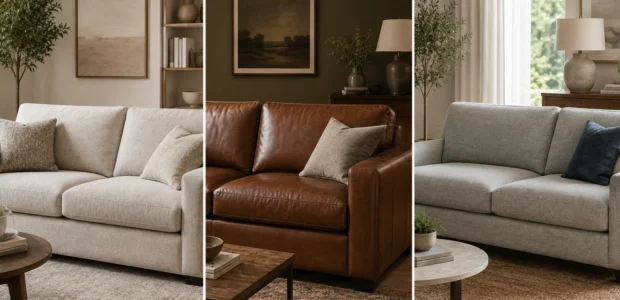

This is one of the longest running debates in furniture shopping, and honestly, most people settle it based on looks alone, then regret the decision within a year of living with it. The truth is, how to choose a sofa really comes down to matching the material to your actual household, not just whatever caught your eye in a showroom. Let’s walk through a real sofa buying guide comparing traditional fabric, leather, and performance fabric, so you can make a choice that holds up long after the new furniture smell fades.
Traditional Fabric: Soft, Varied, but High Maintenance
Fabric wins on pure variety. Nothing else on this list comes close to the range of colors, patterns, and textures available, and there’s a coziness to fabric that leather simply can’t replicate. It’s also thermally neutral, meaning it feels warm in winter and breathes reasonably well in summer, which matters a lot if you live somewhere with real seasonal swings.
The tradeoff is maintenance. Traditional fabrics like linen, cotton, and wool blends absorb spills rather than resisting them, often requiring professional cleaning for anything beyond a light stain. They’re also more prone to snagging if you’ve got cats or an especially energetic dog around. A quality fabric sofa typically lasts somewhere between 5 and 12 years depending on how well it’s cared for. This makes fabric a strong pick for design forward buyers who like redecorating every 5 to 7 years, or for households using the sofa in a lower traffic, adult only room.
Leather: The Long Haul Investment
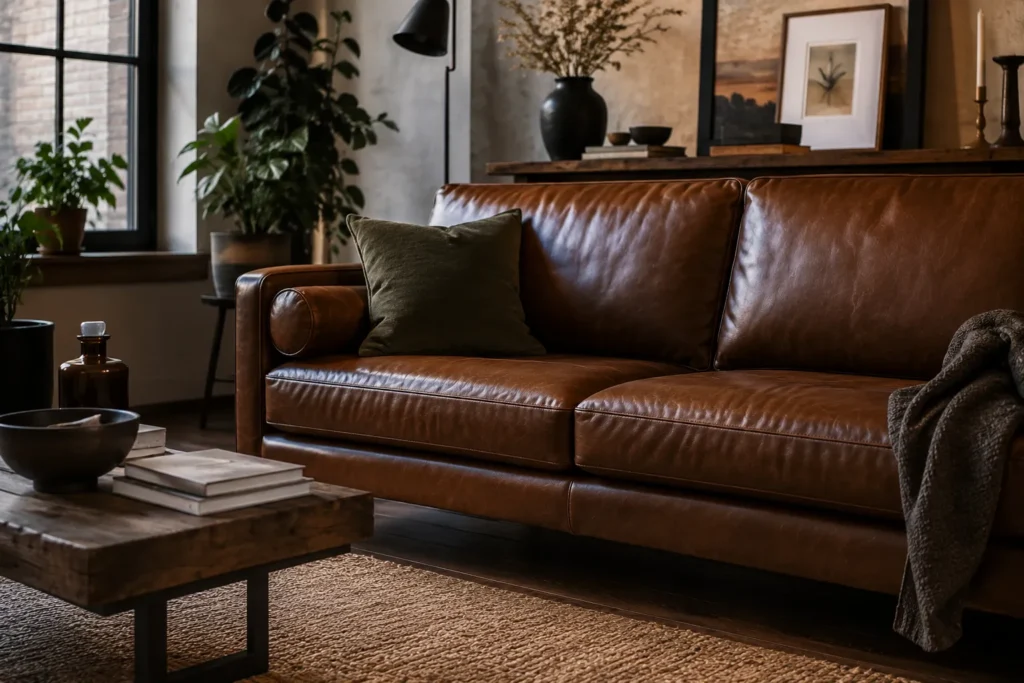
Leather plays a completely different game. It wipes clean in seconds, doesn’t give dust mites anywhere to settle since there’s no woven fiber gap for them to hide in, and it genuinely ages well, developing a mellower, more character filled look rather than appearing worn out.
There are real tradeoffs though. Leather takes on the temperature of the room, so it can feel noticeably cold in winter or a bit sticky against bare skin in summer, especially with lower quality leather. It also needs occasional conditioning to avoid drying out and cracking over time. Where leather truly stands apart is lifespan, a well maintained, quality leather sofa can last 15 to 20 years or more, dramatically longer than fabric under similar use. If you’re the type who buys once and keeps a piece for decades, or if daily wipe and go maintenance appeals to you more than deep cleaning, leather earns its higher price tag.
Performance Fabric: The Modern Middle Ground
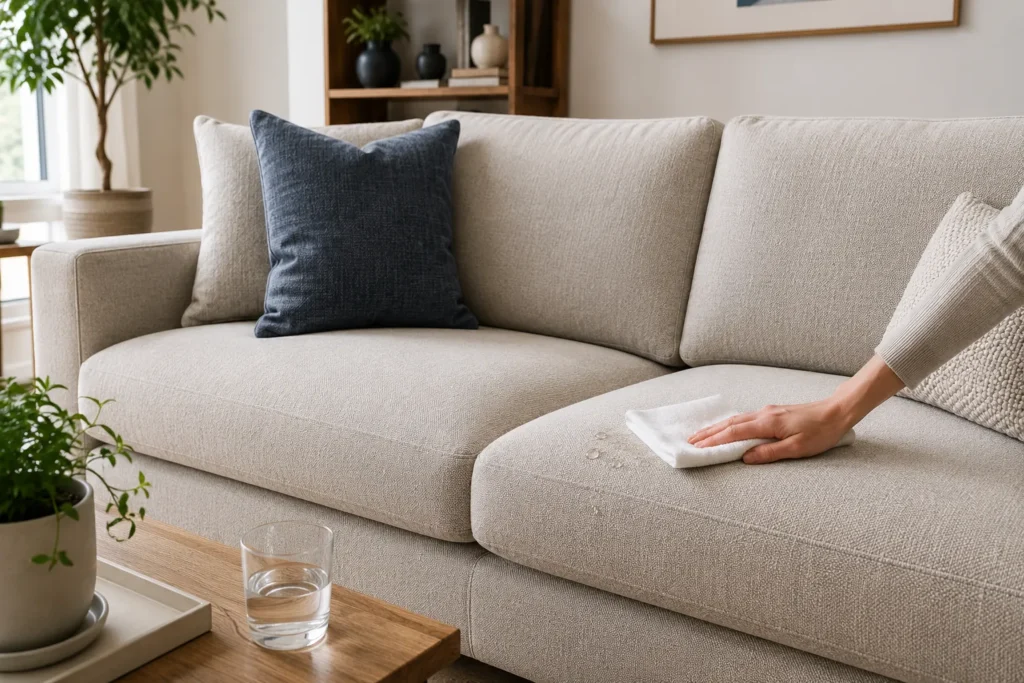
Performance fabric isn’t actually one single material, it’s a category of engineered textiles, commonly crypton, olefin, or solution dyed acrylic, built to resist stains at the fiber level itself rather than relying on a surface coating that eventually wears off. Spills tend to bead up on the surface rather than soaking in, giving you a real window to wipe them away before they set.
This is genuinely the sweet spot for busy households. Performance fabric handles spills, scratches, and heavy daily use far better than traditional fabric, while still delivering the soft, inviting feel that makes fabric appealing in the first place. When shopping, look specifically for a Martindale rub count of at least 20,000 for a moderately busy household, or 30,000 or higher if kids or pets are part of the daily routine. This number tells you how many rubbing cycles the fabric can withstand before showing wear, and it’s one of the more reliable indicators of real durability.
Leather Sofa vs Fabric Sofa: The Real Deciding Factors
A few practical factors tend to settle this debate more than style preference alone. Climate matters more than people expect, leather transfers room temperature directly to your skin, while fabric stays more thermally neutral, which becomes a real consideration if your home swings between hot summers and cold winters. Allergies are another genuine factor, leather’s lack of fiber gaps makes it a better option for households managing dust mite sensitivities.
Budget plays a role too, and here’s something worth knowing, performance fabric usually beats a cheap, low grade leather at the same price point, since bonded leather looks like a bargain but rarely holds up the way genuine leather does. When you’re weighing leather couch vs fabric couch options side by side, these practical, day to day factors usually matter more than which one simply looks better in a photo.
Read More: IKEA vs Castlery vs West Elm: Which Sofa Brand Is Suitable
How to Buy a Sofa: What to Check Before You Commit
A few specific checks separate a good long term purchase from a disappointing one. Ask for the Martindale rub count on any fabric option in writing, not just a general “durable” claim. If you’re considering leather, ask specifically what grade it is, full grain, top grain, or bonded, since the difference in longevity between these is substantial.
Beyond the upholstery itself, look for a kiln dried hardwood frame and a stated foam density number, details that matter more for long term comfort and structural integrity than the fabric or leather covering it. And if at all possible, sit on the actual piece for several minutes in a showroom. Comfort, temperature, and how a material genuinely feels are nearly impossible to judge accurately from photos alone.
Quick Cheat Sheet by Household
If your budget is tight, choose a solid performance fabric over a cheap leather every time. Families with kids or pets do best with performance fabric or top grain leather. Allergy sufferers should lean toward leather first. If you’re buying once and keeping the piece for decades, full grain leather is the clear winner. And if you love redecorating every few years, traditional fabric still offers the widest range of styles to play with.
Once you know which material fits your household, sourcing the actual sofa is where a little extra help goes a long way. The Home Gardenist regularly features discounts, coupons, and savings across a wide range of furniture brands, covering fabric, leather, and performance fabric options alike, so you can find the right sofa for your home without paying full price at every stop.
The Bottom Line
This couch buying guide really comes down to one core idea, matching the material to your actual lifestyle rather than chasing whatever looks best in a showroom photo. Whichever material wins for your household, prioritize frame quality and a real rub count or leather grade over marketing language alone, and you’ll end up with a sofa that still feels like a good decision several years down the road.