
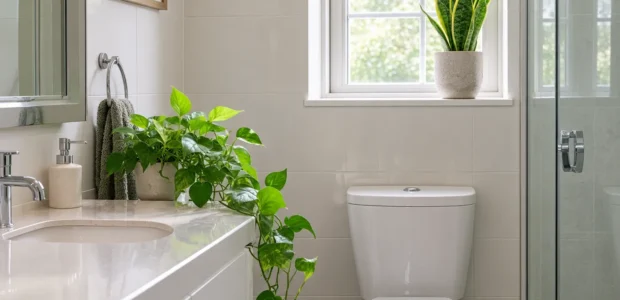

A bathroom might seem like an unlikely place for a houseplant, but step back and look at the conditions. There is warmth, moisture in the air, and usually enough filtered light to support a surprising range of tropical plants. After a hot shower, your bathroom can feel remarkably similar to the humid environment many of these plants naturally enjoy.
The catch is that humidity is only part of the equation.
“If my bathroom is steamy, any plant should be happy there, right?” Not quite. A plant still needs enough light to grow, and wet air does not mean its roots want to sit in soggy soil. In fact, current plant care guides consistently point to light, drainage, humidity, and airflow as the key factors when choosing plants for a bathroom.
So, which plants actually make sense for this unusual room? Here are 10 of the best bathroom plants to consider, whether your space has a sunny window, a dim corner, or almost no natural light.
What Makes a Plant Good for the Bathroom?
Before bringing home the prettiest plant you see, take a look around your bathroom.
Does sunlight come through a window? Is the room warm and humid after showers? Does an exhaust fan run regularly? Do you have a shelf, windowsill, or empty corner?
These details matter because the ideal bathroom plant needs to cope with moisture while also handling the amount of light available.
“Start with the light, then choose the plant,” is a useful rule to remember.
Plants that naturally grow beneath tropical forest canopies are often particularly suitable because they are accustomed to humidity and filtered light.
1. Boston Fern
If you want your bathroom to feel like a little indoor jungle, start with a Boston fern.
Its soft, arching fronds look beautiful beside a bathtub, on a shelf, or in a hanging planter. The humid air created by regular showers can also make the bathroom a more comfortable environment for this moisture loving plant.
Keep the soil consistently moist without leaving it saturated. Give it bright or medium indirect light and trim away brown fronds when needed.
“Want that lush, spa like look?” A Boston fern is hard to beat.
2. Pothos
Pothos is one of the easiest choices for a bathroom, particularly if you are new to houseplants.
Its trailing stems look fantastic cascading from a shelf, cabinet, or hanging planter. It also tolerates lower light better than many decorative houseplants, although brighter indirect light generally encourages stronger growth.
Allow the soil to dry somewhat between waterings rather than watering simply because the bathroom feels humid.
If you are looking for the best bathroom plants low light spaces can support, pothos deserves a place near the top of your list.
3. Snake Plant
Some bathrooms seem determined to challenge every plant you bring home. The snake plant does not mind much.
It tolerates low light and can handle periods of neglect because its thick leaves store water. That makes it particularly useful for bathrooms where you want greenery without another demanding daily task.
The important thing is not to overwater it. Humid air does not mean the soil should remain wet.
“Check the soil before you water.” That simple habit can make all the difference.
4. Peace Lily
Peace lilies bring something special to the bathroom because they combine attractive foliage with elegant white flowers.
They appreciate humidity and can tolerate relatively low light, although they generally perform better when they receive indirect light. They also have a useful habit of drooping when they need water, giving you an obvious visual signal.
Once watered, the leaves can perk back up.
Keep the plant away from direct drafts and avoid allowing water to sit around its roots. Peace lilies are also toxic if eaten, so households with curious pets should place them somewhere inaccessible.
5. ZZ Plant
If your bathroom is dim and your watering routine is less than perfect, consider a ZZ plant.
Its glossy foliage gives a bathroom a polished, modern appearance, while its ability to tolerate lower light makes it a practical choice for darker spaces.
The ZZ plant stores water in its underground structures, so frequent watering is unnecessary. Let the soil dry before watering again.
“Less attention, please” is practically the ZZ plant’s motto.
6. Spider Plant
Spider plants are cheerful, adaptable, and easy to display.
Place one on a bathroom shelf or vanity where its narrow leaves can spill naturally over the edge. It can tolerate lower light, although brighter indirect light usually produces healthier growth.
Spider plants also produce small plantlets that hang from mature plants, giving you an easy way to grow new plants.
If you want a bathroom plant that looks full without taking over the room, this is a great option.
7. Bird’s Nest Fern
For something a little more architectural, try a bird’s nest fern.
Unlike the feathery Boston fern, this plant grows in a neat rosette of broad, rippled leaves. It enjoys humidity and works particularly well in a bathroom with indirect natural light.
Water the soil around the plant rather than repeatedly pouring water directly into its central crown. Good drainage is essential, especially in a humid room.
Place it somewhere it can enjoy the moisture in the air without being hit directly by shower water.
8. Chinese Evergreen
Chinese evergreen is another excellent choice for a bathroom with limited natural light.
Its patterned foliage can bring color and texture to a room without requiring bright sunlight. It is also relatively adaptable, making it useful for beginners.
Keep it in indirect light and allow the soil to dry slightly between waterings. If the bathroom is particularly dark, growth may slow, so consider adding a small grow light.
9. Heartleaf Philodendron
Love the trailing look of pothos? Give heartleaf philodendron a try.
Its heart shaped leaves and trailing stems work beautifully from a high shelf or hanging planter. It appreciates humidity and can tolerate lower light, making it a natural candidate for bathrooms.
Do not confuse humidity with constant moisture in the pot. Let the soil dry somewhat between waterings and make sure excess water can escape.
“Let the leaves enjoy the steam, but keep the roots from sitting in water.”
10. Parlor Palm
If you want something that feels a little more tropical, bring in a parlor palm.
Its delicate foliage adds height and movement without overwhelming a smaller bathroom. It generally prefers indirect light and appreciates the extra humidity that bathrooms can provide.
Give it enough space for air to circulate around the leaves and avoid keeping the soil constantly saturated.
A parlor palm can turn an ordinary bathroom corner into a surprisingly relaxing green space.
The Best Bathroom Plants Low Light Spaces Can Handle
Not every bathroom has a bright window. Fortunately, several of these plants can tolerate lower light.
Pothos, snake plants, ZZ plants, Chinese evergreen, peace lilies, and heartleaf philodendrons are among the more practical choices for dim bathrooms. Current plant guides similarly identify these types as suitable options for lower light conditions.
Still, remember that low light does not mean no light.
“Low light” means there is some usable light, even if it is weak. A plant sitting in complete darkness cannot photosynthesize simply because the room becomes humid after a shower.
What About the Best Bathroom Plants No Light?
Here is where things get interesting.
If your bathroom has absolutely no window and remains dark whenever the lights are off, there are no houseplants that can thrive indefinitely on humidity alone. Even tough plants such as snake plants and ZZ plants need light to grow. Current bathroom plant guides recommend either providing artificial grow lighting or regularly moving plants into a brighter room.
A small grow light can therefore make a dramatic difference.
You can also rotate your plants. Keep one plant in the bathroom for a while, then move it to a brighter room while another takes its place.
Simple Tips for Keeping Bathroom Plants Healthy
Choosing the right plant is only half the job.
First, use pots with drainage holes. A humid bathroom can slow evaporation from the soil, making poor drainage particularly troublesome.
Second, check the soil before watering. Do not assume that a steamy shower has watered the plant for you.
Third, give your plants some airflow. Humidity is helpful, but stale, constantly wet conditions can encourage fungal problems.
Finally, keep plants away from direct splashes. Your shower is not a watering can.
Save on Your Bathroom Plant Setup With The Home Gardenist
Once you start planning a bathroom garden, you may find that the plant itself is only the beginning. You might want decorative planters, shelves, home accessories, garden supplies, lighting, or other pieces to complete the look. That is where The Home Gardenist can be useful.
The site brings together deals from a wide range of home and garden brands, giving shoppers a place to look for discounts, coupons, sale offers, and other ways to save. Its current offers include examples such as discounts on sale items, home décor savings, free shipping offers, and promotional deals.
“So before paying full price, check for a deal.”
That extra step can be especially useful when you are buying several items for a bathroom makeover rather than just one plant.
Turn Your Bathroom Into a Green Retreat
The best bathroom plants are not necessarily the rarest or most exotic ones. They are the plants that match your room.
A Boston fern can bring lush tropical texture to a humid bathroom with good indirect light. Pothos can trail beautifully from a shelf. A snake plant or ZZ plant can handle a darker corner with considerably less fuss. And if your bathroom has no natural light at all, a grow light can turn an unsuitable space into a workable one.
The key is simple: match the plant to the light, respect its watering needs, and let the bathroom humidity work in your favor.
Do that, and your bathroom can become more than a purely functional room. It can become one of the greenest and most relaxing corners of your home.