
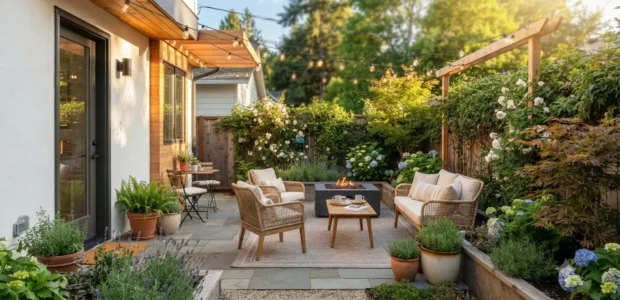

Close your eyes for a second and picture your dream patio. Maybe it’s a cozy corner with a fire pit and a couple of chairs. Maybe it’s a full outdoor dining setup under a pergola, string lights glowing overhead. Whatever comes to mind, here’s the good news: getting there isn’t nearly as complicated as it feels.
A lot of people put off designing a patio simply because they don’t know where to start. But when you break it down, it really comes to a handful of decisions made in the right order. This guide walks you through exactly how to design a patio, one step at a time, so by the end you’ll have a clear picture of what your own dream patio should look like.
Step 1: Measure and Map Your Space
Before you fall in love with any particular look, start with your actual yard. Grab a tape measure and sketch a rough outline of the space you’re working with. Note anything already there that might shape your plan: a big tree, a slope, a door or window that opens right onto the area.
This step feels basic, but skipping it is one of the most common mistakes people make. It’s easy to picture a sprawling patio with a dining set and a lounge area, only to realize later that your actual space fits about half of that. Getting your measurements down early means every decision after this one is grounded in reality instead of guesswork.
Step 2: Define the Purpose
Once you know what space you have, ask yourself the real question: what do you actually want to use this patio for? Is it a spot for family dinners? A quiet corner to read with your morning coffee? A place built for hosting friends on weekends? Maybe it’s a mix of a few of these.
This step matters more than people expect, because it shapes everything that follows. A patio meant for quiet mornings looks completely different from one built around entertaining a crowd. When you’re designing my patio (or yours), let the purpose lead the way rather than starting with furniture or decor and hoping it all fits together later.
Read More: Low Maintenance Patio Materials That Are Affordable & Beautiful
Step 3: Choose a Style That Fits Your Home
Now comes the fun part: figuring out the look. Take a walk around your home and notice its existing style. A modern house with clean lines will feel most cohesive with a patio that mirrors that simplicity. An older, more traditional home often pairs beautifully with natural stone and warmer, classic touches. There’s no single right answer here, just the version that feels connected to the rest of your property.
It helps to gather a bit of inspiration before locking anything in. Save a few photos, note colors or materials you keep gravitating toward, and let a pattern emerge. Most people find that once they’ve looked at enough examples, their own preferences become obvious pretty quickly.
Step 4: Plan the Layout and Flow
This is really the heart of designing patio spaces that actually work, not just ones that look good in photos. Think about shape first: a rectangular layout is the easiest to plan around furniture, while a circular or custom shape adds character but takes a bit more thought to lay out well.
Beyond shape, think about flow. Leave enough room to walk comfortably between a seating area and a dining table, and make sure furniture doesn’t block natural pathways in and out of your home. It’s also worth thinking ahead about drainage, since you want water flowing away from your house rather than pooling near the foundation. None of this needs to be complicated, it just needs a little forethought before anything gets built.
Step 5: Pick Furniture and Key Features
With your layout mapped out, it’s time to start filling it in. Begin with furniture, since it usually takes up the most space and will guide everything else. From there, think about the features that turn a patio into something special: a fire pit for cozy evenings, a pergola for shade and structure, maybe even a small water feature if you love the sound of running water.
This is really where your dream patio ideas start becoming a real plan. Keep your earlier measurements in mind so nothing feels cramped, and try not to add every feature at once. A patio with one or two well chosen focal points almost always feels more intentional than one trying to do everything.
Step 6: Add the Finishing Touches
The details are what make a patio feel finished rather than just functional. String lights or simple lanterns add warmth once the sun goes down. A few potted plants soften all the hard surfaces around them. Outdoor rugs and cushions bring in color and comfort without requiring any construction at all.
These touches also tend to be the most affordable part of the whole process, so if your budget is tight, this is a great place to spend a little extra attention. Small additions like these often make the biggest difference in how a space actually feels to sit in.
As you start gathering these final pieces, from planters to lighting to comfortable seating accents, having a trusted place to shop makes the process a lot easier. At The Home Gardenist, we’re passionate about helping you make the most of every space in your home, with practical ideas, inspiring decor tips, and carefully selected products that combine style with function. Explore our latest picks to help bring your dream patio together, without overspending.
Step 7: Keep It Looking Good
Once everything is in place, a little upkeep goes a long way. Sealing pavers every so often keeps stone surfaces looking fresh, wiping down furniture prevents wear from weather, and rotating or trimming plants keeps your greenery looking its best through the seasons. None of this takes much time, but it’s what keeps your dream patio feeling like a dream year after year.
Bringing It All Together
Designing a patio doesn’t have to happen all at once, and honestly, it rarely does. Most dream patios come together gradually, one decision at a time, exactly the way we’ve walked through here. Start with your measurements, get clear on how you’ll use the space, choose a style that fits your home, and build outward from there.
Take it one step at a time, and don’t feel pressure to get it perfect on the first try. The patios people love most are usually the ones that grew a little over time, shaped by real use and small updates along the way. Yours can absolutely get there too.