
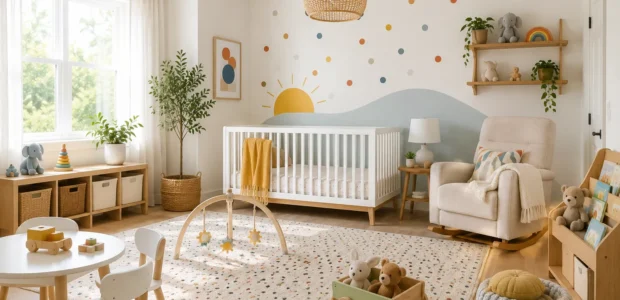

Picking a color for your kid’s room feels like it should be simple, until you actually stand in the paint aisle staring at forty shades of blue. It matters more than a regular room repaint too, since this color has to survive years of changing tastes, from nursery days all the way through the “I want everything to be my favorite color” phase.
The good news is that 2026 is leaning toward kids room color ideas that are playful without being overwhelming, and flexible enough to grow along with your child instead of aging out in a year or two. Here’s a look at the color themes shaping kids’ bedrooms this year, and why each one works so well.
Sage Green: Calm, Neutral, and Built to Last
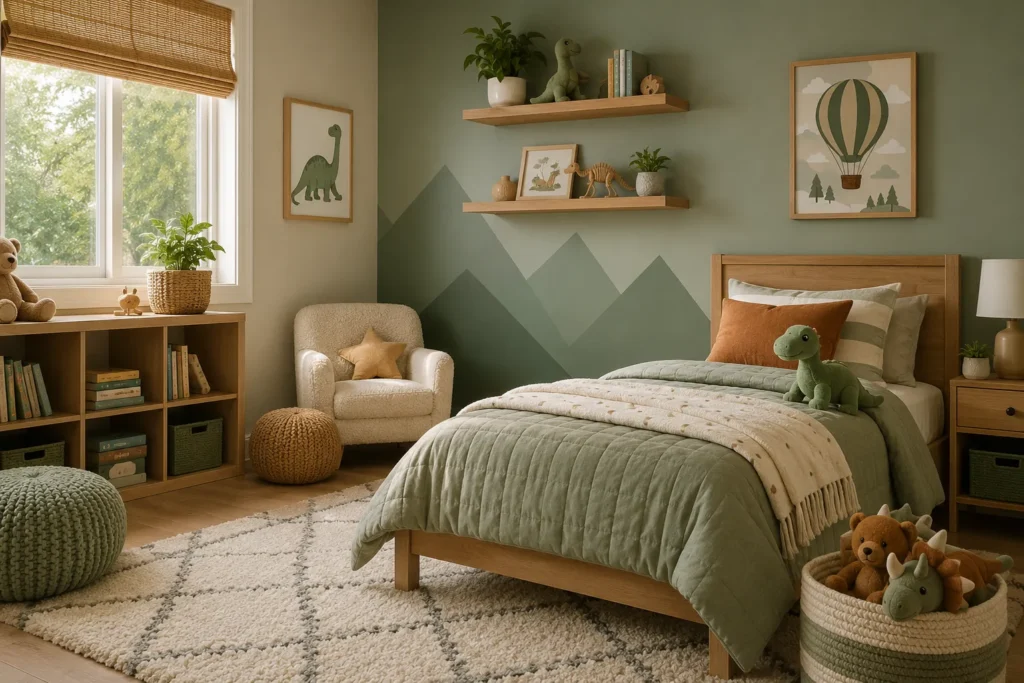
Sage green has quietly become one of the most popular kids room paint colors, and it is easy to see why. It is soothing without feeling boring, and it works beautifully for both boys and girls, which makes it a smart pick if you are not set on a specific theme yet.
Pair it with cream walls, warm wood furniture, or soft gold accents, and the room feels grounded rather than childish. Since sage green already leans toward a more grown up palette, it is one of those rare colors that will not feel dated as your child grows older.
Soft Sky Blue: A Classic That Still Feels Fresh
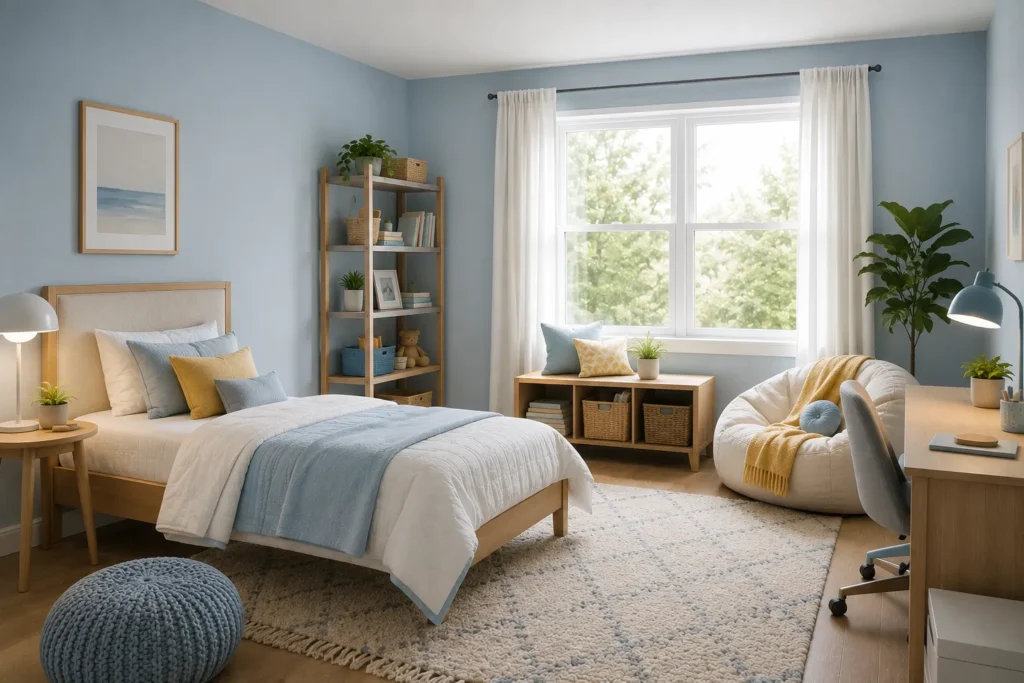
Soft sky blue has been a nursery favorite forever, and it still holds up beautifully in 2026. There is something naturally calming about it, which makes it a solid choice for a room meant for actual sleep, not just play.
It also plays well with other colors, so you are not locked into one look. White trim keeps things crisp, natural wood textures add warmth, and a small pop of yellow or coral instantly brings in some energy without overwhelming the calm base.
Blush Pink and Warm Neutrals: Softer Than Traditional Pink
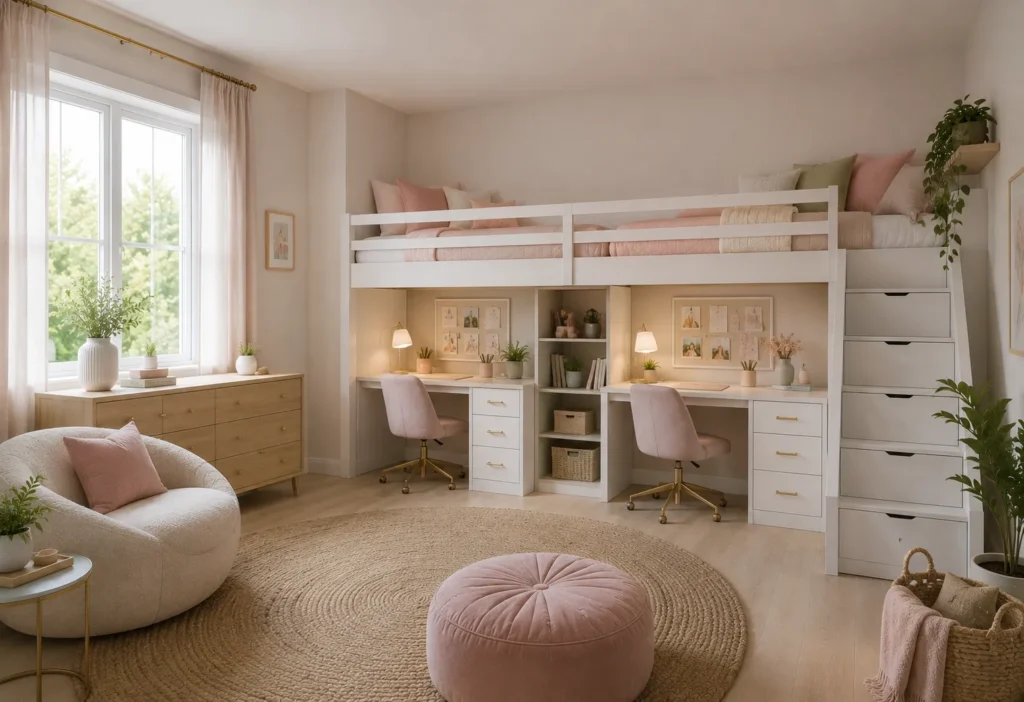
If bright bubblegum pink is not quite what you are picturing, you are in good company. This year, blush pink, dusty rose, and warm beige are taking over as the softer, more sophisticated alternative. It reads as a bit more grown up right from the start, which means less pressure to repaint the moment your child outgrows anything too sweet.
Blush paired with gold accents feels a little glamorous, while blush paired with sage green leans into a softer, nature inspired look. Either combination works well across a wide range of kids bedroom themes.
Mint, Lavender, and Aqua Teal: Best for Creativity and Play
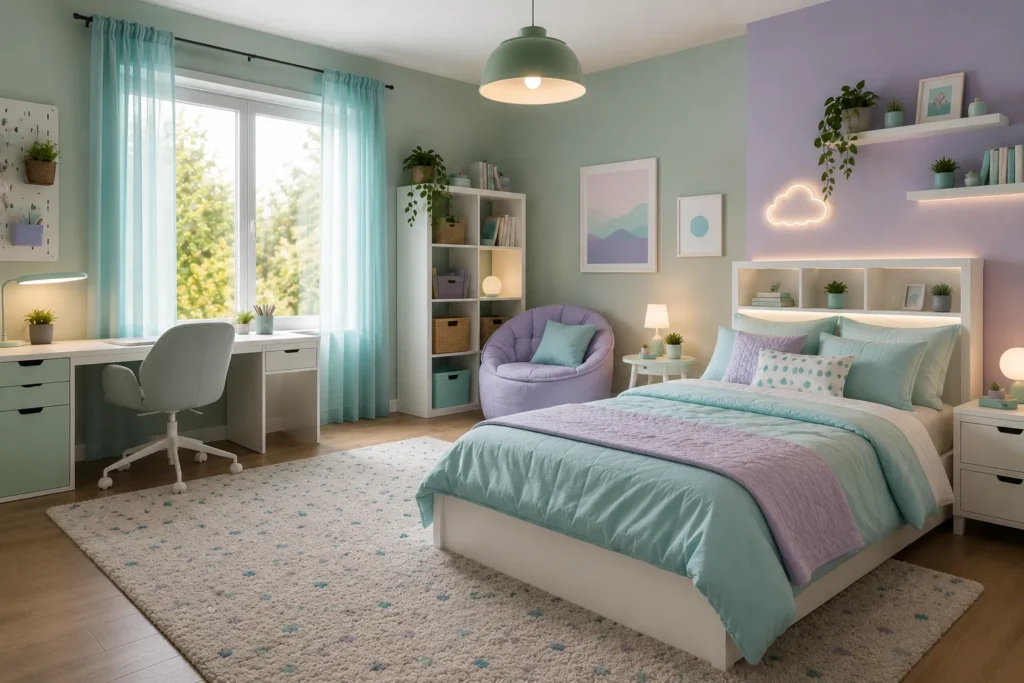
If you want something with a bit more energy than a straight pastel, mint, lavender, and aqua teal are worth a look. They are still easy on the eyes, but they carry more personality than a plain soft blue or pink. Color psychology also points to these tones as helpful for focus and imaginative play, which makes them a great fit for playrooms or a shared study corner.
These shades also lend themselves nicely to kids room designs built around a specific idea, whether that is an underwater theme, an outer space corner, or a nature filled reading nook.
Color Blocking: A Bold, Flexible Approach
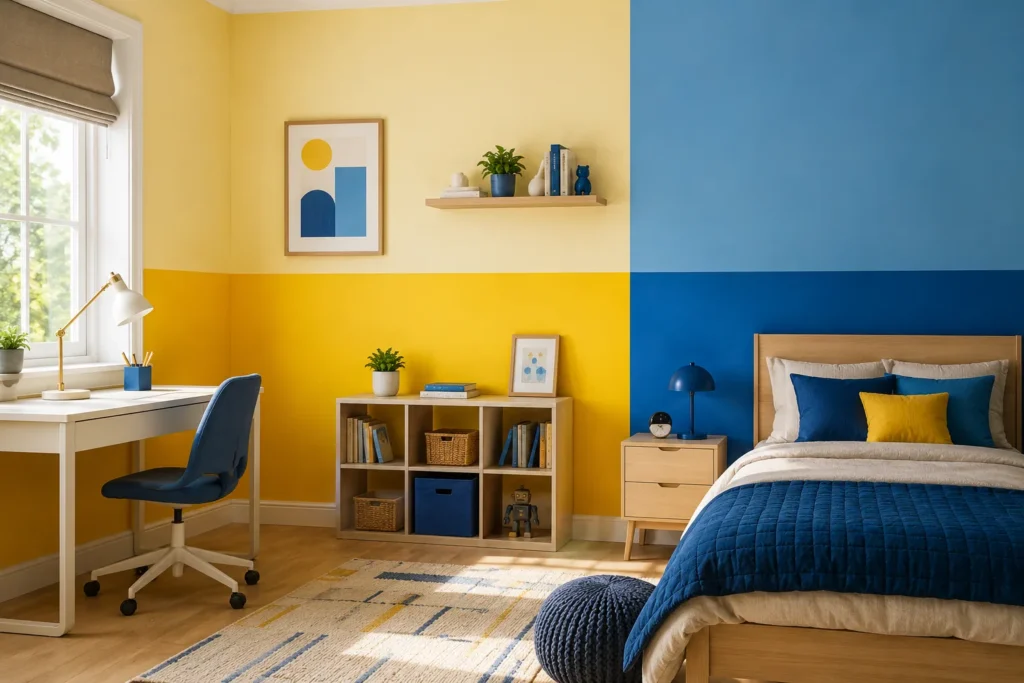
Instead of choosing just one color for the whole room, more families are turning to color blocking, which uses two or three shades in defined sections of a wall rather than one flat coat everywhere. Think a lower half in a deeper color with a lighter shade above it, or a bold accent wall paired with softer tones around it.
This approach has become one of the most popular kids room design ideas because it adds a lot of personality without locking you into a full repaint down the road. If your child’s taste shifts in a year or two, you can often refresh just one section instead of starting from scratch.
Warm, Earthy Tones for a Cozy, Grounded Feel
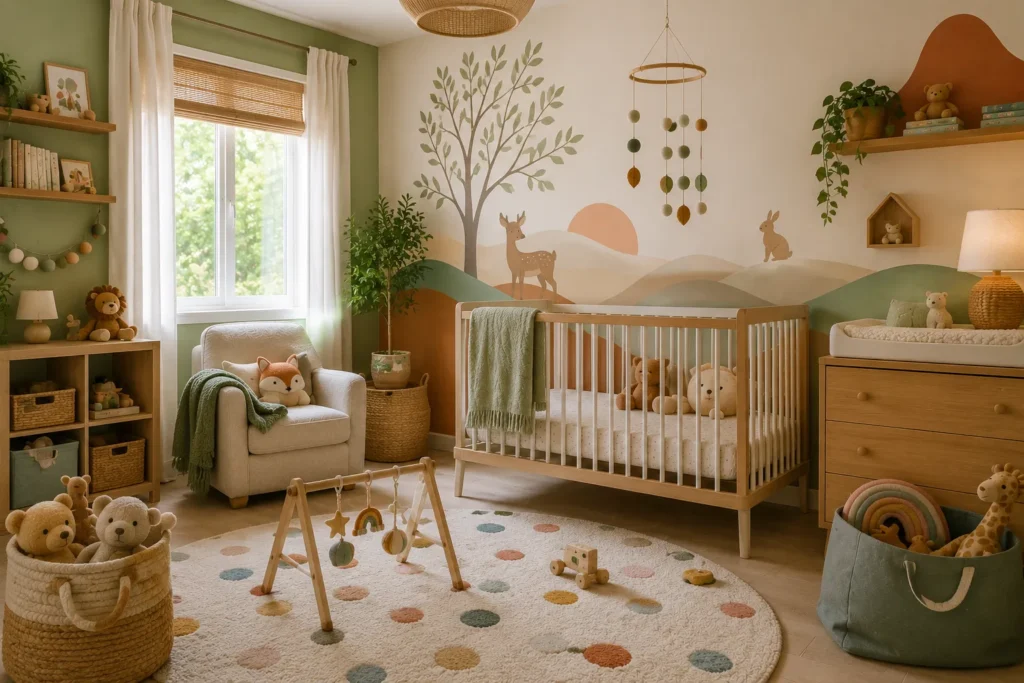
Caramel, terracotta, soft apricot, and gentle rust tones are showing up more and more in childrens bedroom paint designs this year, and they bring a genuinely cozy feeling to a room. These shades feel a little less “kiddie” and a little more timeless, especially when paired with natural wood furniture and woven textures.
If you are hoping for a room that feels calm and a touch more sophisticated while still being warm and welcoming, this palette is worth serious consideration.
How to Choose the Right Theme for Your Child
With so many good options, the real question becomes what fits your child and your space best. Think about their age, whether the room needs to prioritize sleep or play, and how much say they want in the process. Lighter base colors tend to offer the most flexibility, since you can shift the whole feel of the room later just by swapping bedding, art, or a few accent pieces instead of repainting everything.
Once you have your color direction figured out, pulling together the furniture, bedding, and decor to match is where things really come together. At The Home Gardenist, we love helping families make the most of every room in the house, with practical ideas, inspiring decor tips, and carefully selected products that fit your style and budget. We also feature discounts, coupons, and savings on home and kids furnishings, so you can style your child’s room beautifully without overspending.
The Bottom Line
The best kids bedroom design is not about chasing every trend on this list, it is about picking a base color that feels good to spend time in and flexible enough to grow with your child. Whether you lean toward calming sage green, a bold color blocked wall, or a cozy earthy palette, the right choice is simply the one that fits your family and gives your child a room they genuinely love waking up in.