
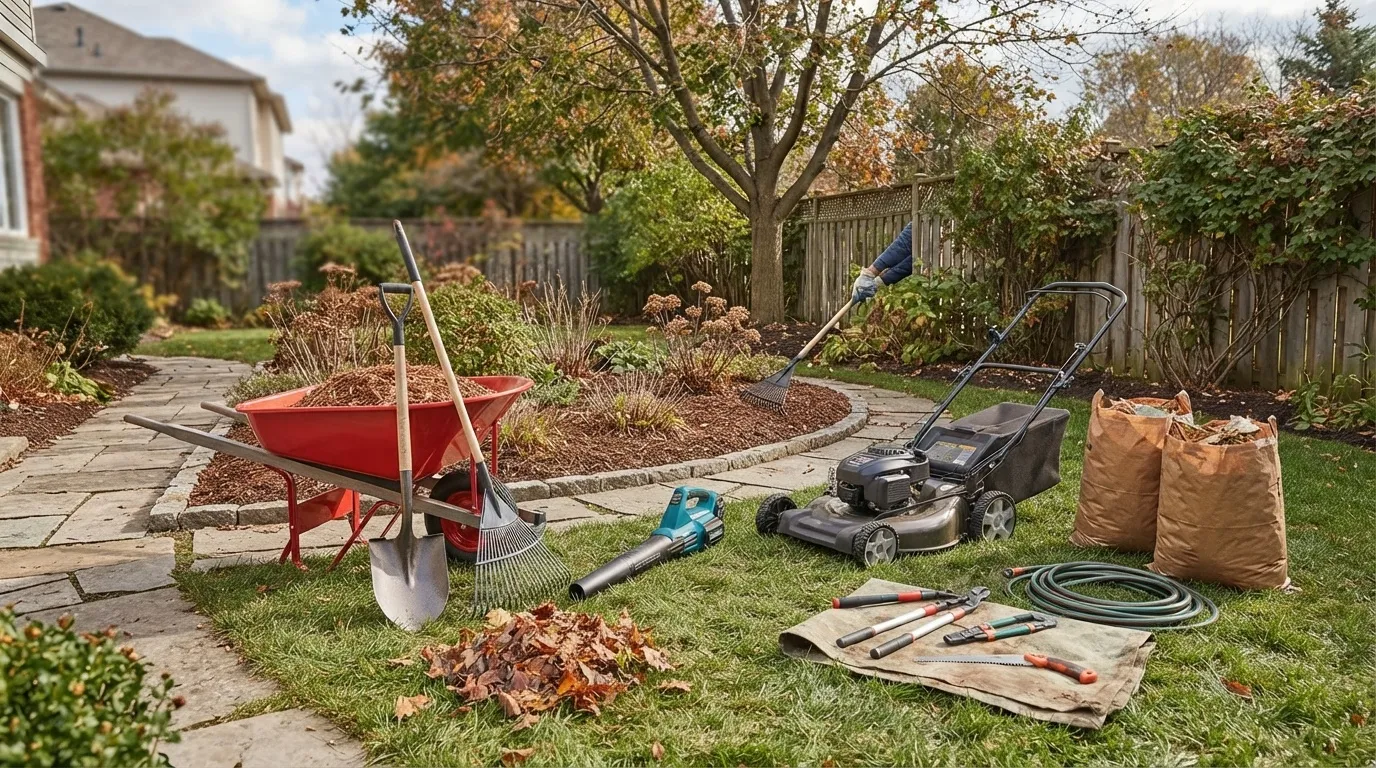

Yard cleanup has a way of feeling overwhelming, mostly because people treat it as one giant job instead of what it actually is, a handful of smaller, seasonal tasks that add up over time. Once you break it down that way, the whole thing gets a lot more manageable. Having the right yard cleanup tools on hand for each step makes an even bigger difference, turning a weekend of frustration into something you can knock out in an afternoon.
Let’s walk through a practical checklist, task by task, along with the tools that actually make each one easier.
Clear the Big Debris First
Before anything else, get the large stuff out of the way. This means fallen branches, dead shrubs, and any leftover leaves still sitting around from the previous season. Clearing this first gives you a clean slate for everything that follows.
For this stage, a shrub rake handles bulkier debris well, while pruning shears or loppers make quick work of smaller branches you’ll want to remove along the way. A tarp or a stack of yard waste bags rounds things out, giving you an easy way to haul everything away once it’s piled up. This is really step one of any seasonal cleanup, clearing space before tackling anything more detailed.
Prune and Trim With the Right Cutting Tools
Once the big debris is gone, it’s time to shape things up. This covers pruning trees, trimming hedges, and removing any branches that are damaged or crossing over each other in a way that blocks healthy growth.
Different branch sizes call for different tools. Pruning shears work well for small branches, loppers handle medium sized ones with a bit more leverage, and a folding saw takes care of anything too thick for either. Timing matters here too, late winter through early spring tends to be the best window for pruning, since fresh cuts have a chance to seal up before new growth kicks in for the season.
Tackle the Lawn Itself
With the bigger cleanup handled, the lawn itself needs its own attention. Mowing, edging, and fertilizing all fall under this category, and together they’re what actually keep your grass looking healthy rather than just tidy for a week.
A reliable lawn mower is the obvious starting point, paired with an edger for crisp, defined borders along walkways and garden beds. A spreader makes fertilizer application even and consistent rather than patchy. This category genuinely represents some of the best tools for yard cleanup when your focus shifts from one time debris removal to ongoing lawn health.
Handle Leaves and Loose Debris
Leaves, grass clippings, and other loose debris scattered across the yard need their own approach, especially once fall rolls around. A leaf blower makes fast work of larger open areas, clearing a lawn in a fraction of the time a rake alone would take.
That said, a rake still earns its keep for detail work, tight spots near flower beds, along fence lines, or anywhere a blower simply can’t maneuver effectively. Keep yard waste bags nearby for collection as you go, so the pile doesn’t just sit there waiting to blow right back across the lawn.
Refresh Beds and Borders
A yard can look cleaned up everywhere else and still feel unfinished without some attention to the beds and borders. Adding fresh mulch and defining crisp edges between beds and grass makes a noticeably bigger visual difference than people expect.
For this task, grab a shovel, a wheelbarrow or garden cart for moving mulch efficiently, and a landscaping rake to spread it evenly once it’s in place. Aim for roughly 2 to 4 inches of mulch depth, enough to suppress weeds effectively without smothering the plants underneath.
Best Tools for DIY Seasonal Yard Cleanups: A Quick Reference
Pulling everything together, a solid core toolkit covers most of what any seasonal cleanup requires, a rake, pruning shears, loppers, a folding saw, a leaf blower, a lawn mower, an edger, a shovel, and a wheelbarrow. That list alone handles the vast majority of tasks covered here.
It’s also worth considering battery powered versions of your power tools where available. They’re generally lighter, easier to start, quieter for residential neighborhoods, and skip the hassle of mixing gas and oil altogether. Taken together, this is really the full range of best tools for diy seasonal yard cleanups worth having on hand throughout the year.
Once you know what’s on your list, The Home Gardenist is worth a look before you buy. The site regularly features discounts, coupons, and savings across a wide range of outdoor and yard tool brands, making it easier to build out a solid toolkit without paying full price at every stop.
Don’t Forget Tool Maintenance
A good toolkit only stays useful if you take care of it. Clean your tools before storing them each season, disinfecting smaller items like pruners and loppers with rubbing alcohol or an all purpose cleaner. For gas powered equipment, drain the fuel or add a stabilizer before it sits unused for months. Battery packs should be stored at a partial charge in a temperature controlled space during the off season rather than left fully charged or completely dead.
These small habits genuinely separate tools that last a decade from ones that quietly fail after just a couple of seasons.
The Bottom Line
A yard cleanup checklist is only as effective as the tools backing it up, and thankfully, most tasks only require a handful of reliable basics rather than an entire shed full of specialty equipment. Tackle one section of the yard at a time, keep your tools in good shape between seasons, and the whole project becomes a lot more manageable than it first feels.