
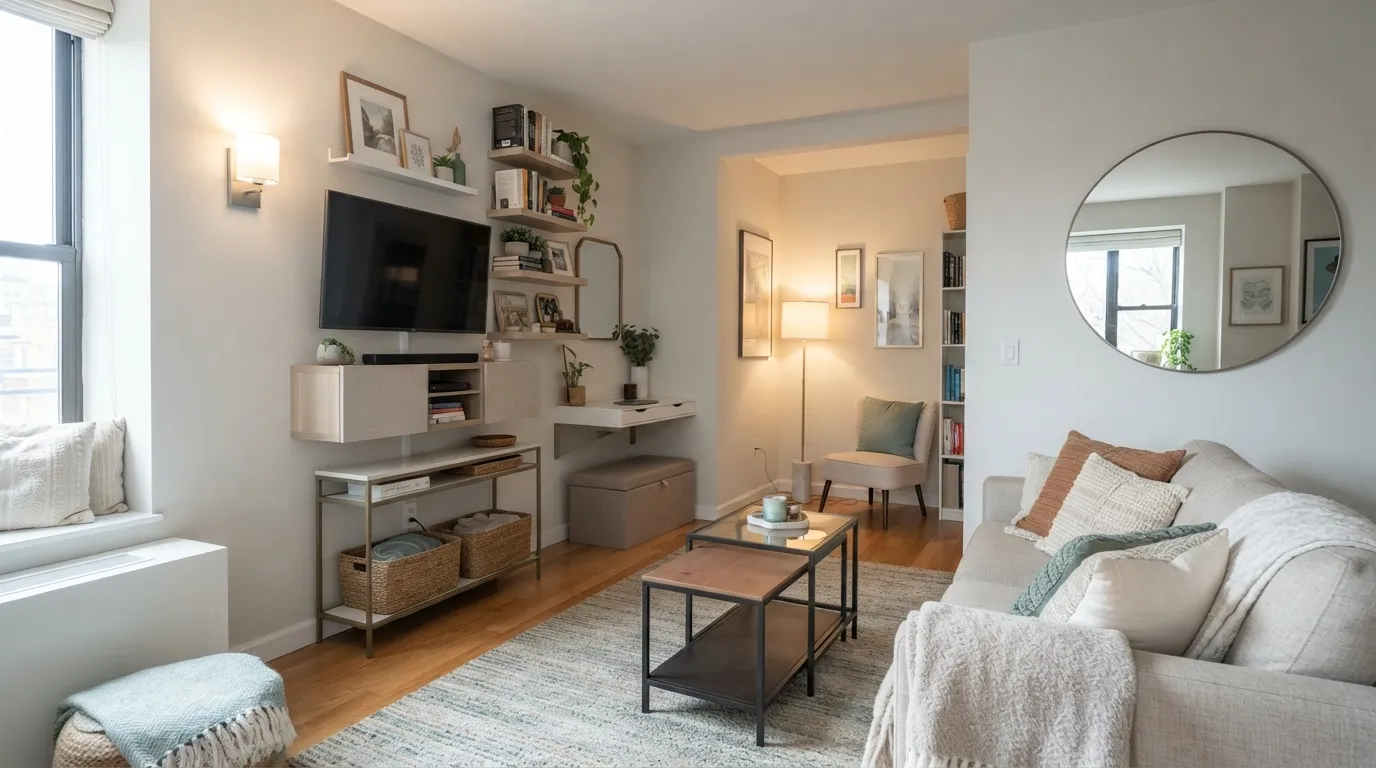

A small living room does not have to feel cramped, crowded, or short on personality. In fact, with the right choices, a compact room can feel just as comfortable and stylish as a much larger space. The secret is to make every piece earn its place.
Think of your living room as a puzzle. Your sofa needs to be comfortable, your coffee table needs to be useful, your storage needs to hide everyday clutter, and your decor needs to add character without taking over the room.
If you are looking for decorating ideas for small living room spaces, start by thinking beyond the floor. Walls, corners, furniture surfaces, and even the space underneath your furniture can all become useful.
Here are ten clever ways to make a small living room work harder while still looking beautiful.
1. Choose Furniture That Does More Than One Job
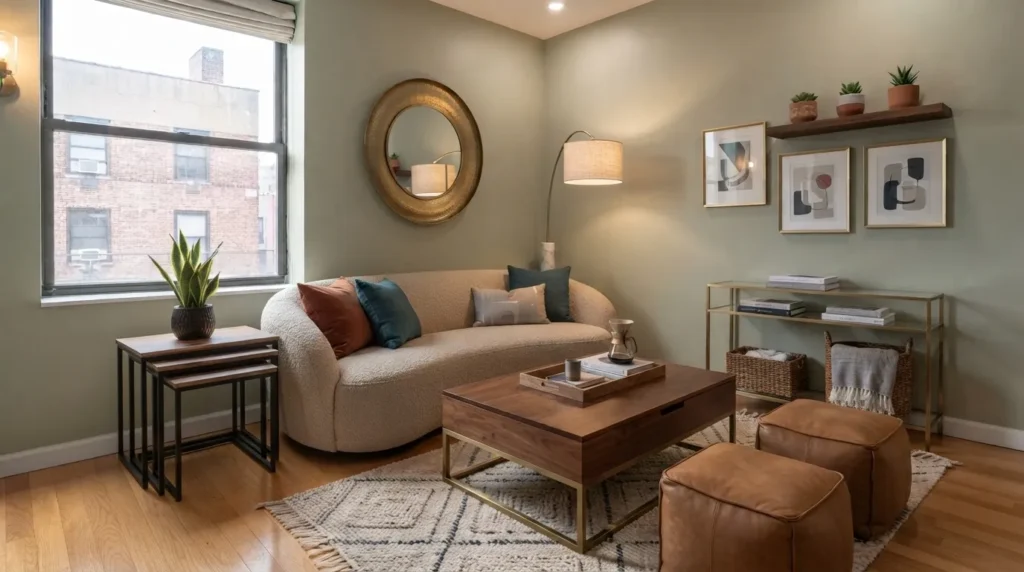
When floor space is limited, single purpose furniture can quickly become a problem. Instead, look for pieces that can perform two or even three functions.
A storage ottoman, for example, can act as a footrest, extra seating, and a place to hide blankets or books. A small bench can provide seating when guests arrive and double as a surface for decorative baskets. Nesting tables can be separated when you need more table space and stacked away when you do not.
“Before buying anything, ask yourself what else this piece can do,” is a useful rule for small rooms.
This approach is one of the most practical living room decor ideas for small spaces because it reduces the number of objects competing for precious floor area. Designers also regularly recommend multifunctional furniture as a small space solution.
2. Make Your Walls Work Harder
When you run out of floor space, look up.
Vertical storage can completely change how a small living room functions. Install floating shelves for books, plants, framed photographs, and small decorative objects. A tall, narrow bookcase can give you considerably more storage than a short, wide cabinet while using less floor space.
You can also use the wall above a sofa for artwork or shelving. The trick is to create height without filling every available inch.
“Let the eye travel upward,” designers often advise, because vertical elements can make ceilings appear higher and rooms feel more spacious.
This is particularly useful if you are searching for living room decorating ideas for small spaces where storage and style need to coexist.
3. Let Mirrors Create the Illusion of Space
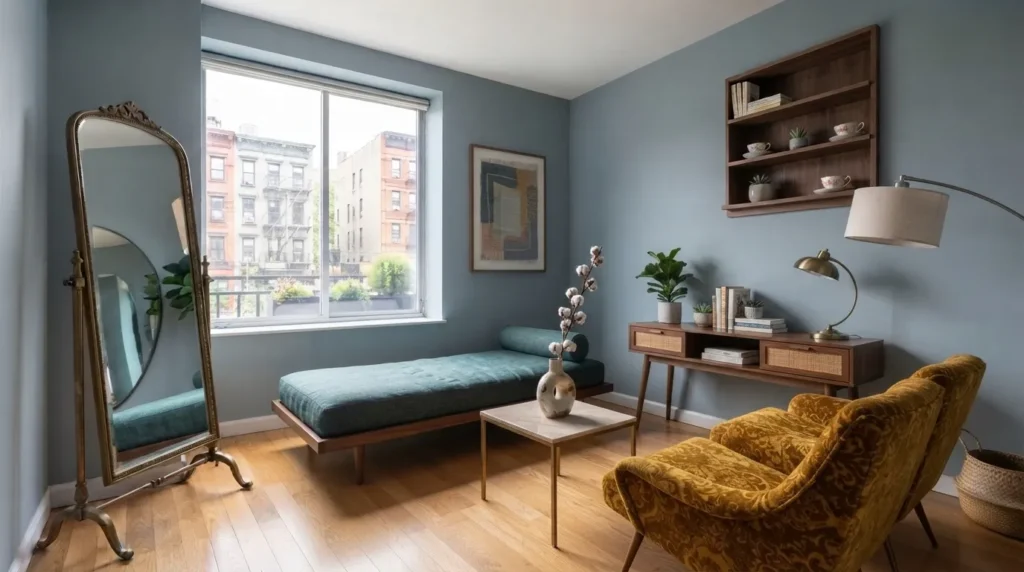
Few decorating tricks are as effective as a well placed mirror.
A large mirror opposite or near a window can reflect natural light and make the room appear deeper. You do not necessarily need one enormous mirror either. A collection of smaller mirrors can create an attractive feature wall while producing a similar sense of openness.
“Use the mirror to reflect something beautiful,” rather than pointing it toward a cluttered area.
For a narrow living room, try a tall mirror that emphasizes height. For a darker room, place a mirror where it can bounce light into the space.
Reflective surfaces are a recurring recommendation from designers because they can add brightness and visual depth without taking up much floor space.
4. Replace the Traditional Coffee Table
A bulky rectangular coffee table can dominate a small room. Fortunately, you have plenty of alternatives.
Try a round table, nesting tables, a slim table with storage underneath, or a storage ottoman. A glass or acrylic table can also work beautifully because it provides a useful surface without creating a heavy visual block.
“Choose something you can move easily,” especially if your living room serves several purposes throughout the day.
For example, nesting tables can be spread out when friends visit and tucked together afterward. A storage ottoman can hold blankets while also functioning as a comfortable footrest.
The best decor ideas for small living rooms are often the ones that give you flexibility without adding more furniture.
5. Turn an Empty Corner Into a Feature
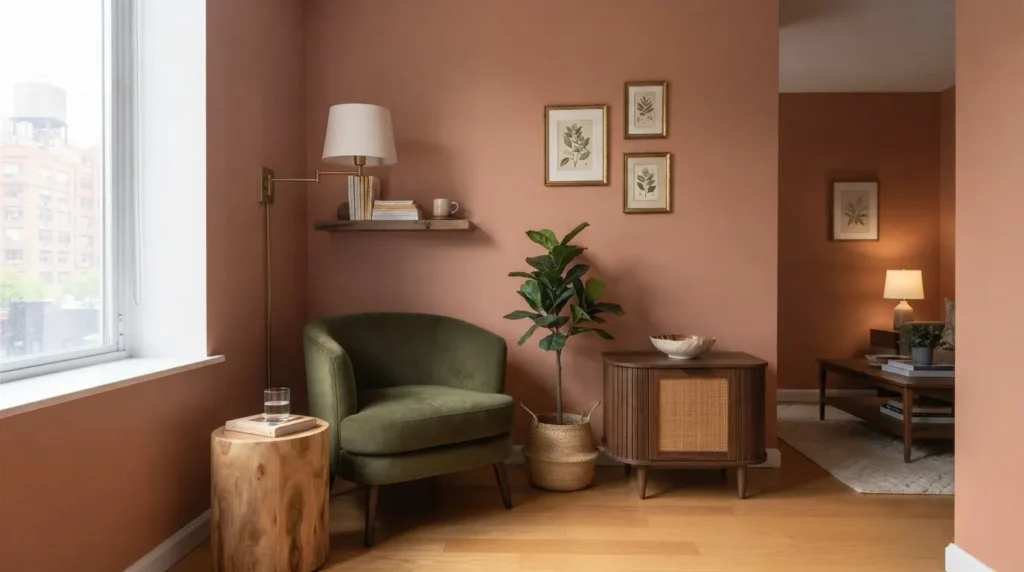
That awkward corner you keep ignoring could become one of the most useful parts of your living room.
Place a compact reading chair and a small wall light in the corner to create a cozy reading nook. Alternatively, add a tall plant, a narrow shelving unit, or a small accent table.
If you need extra storage, a corner cabinet can make use of space that might otherwise remain empty.
“Do not dismiss the corners,” because they can provide valuable storage and decorating opportunities without interfering with the main walking area.
These small corner decoration ideas for living room spaces are especially helpful in apartments where every square foot matters.
6. Mount the Television and Lighting
Floor standing television units can consume surprisingly valuable space. Mounting your television on the wall can immediately open up the area underneath it.
You can use that freed up space for a slim console, baskets, or simply leave it empty to create more visual breathing room.
The same principle applies to lighting. Instead of using a bulky floor lamp, consider a wall mounted sconce. If you need task lighting beside a sofa, a swing arm wall light can provide illumination without taking up valuable floor or table space.
This is where clever living room decor ideas for small spaces become more than decorative. They actually improve how you move through the room.
7. Use Color to Create Visual Continuity
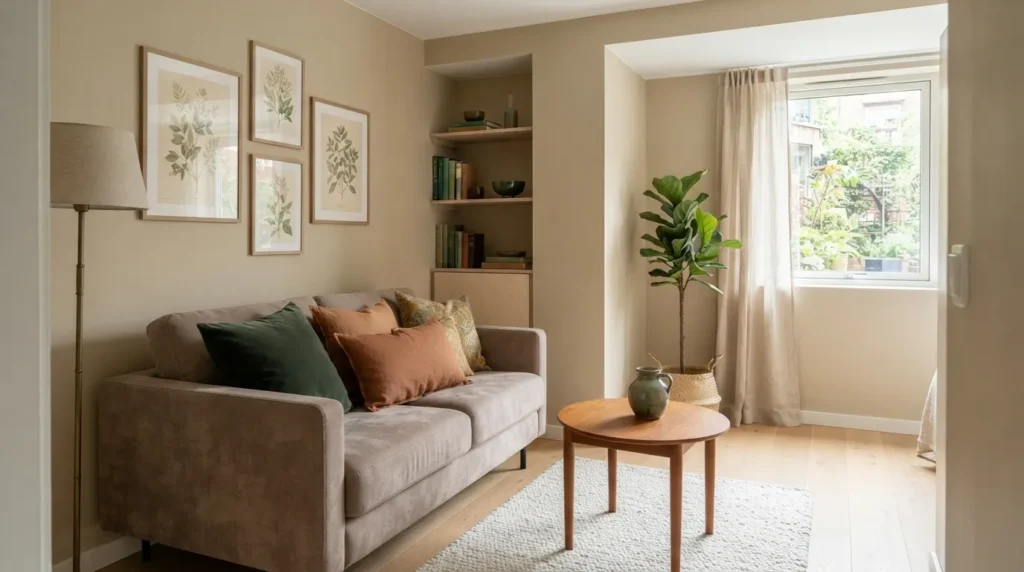
A small room does not automatically need to be completely white.
Light colors can certainly make a room feel brighter, but the bigger goal is visual continuity. When your walls, larger furniture pieces, and textiles work within a cohesive color palette, the room can feel less visually fragmented.
Try soft neutrals, warm earth tones, muted greens, or gentle blues. Then introduce stronger colors through cushions, artwork, curtains, or a small rug.
“Keep the big elements calm and let the accessories have fun.”
You can also repeat one color in several areas of the room. This helps connect separate pieces and creates a more unified appearance.
8. Use Slim and Flexible Lighting
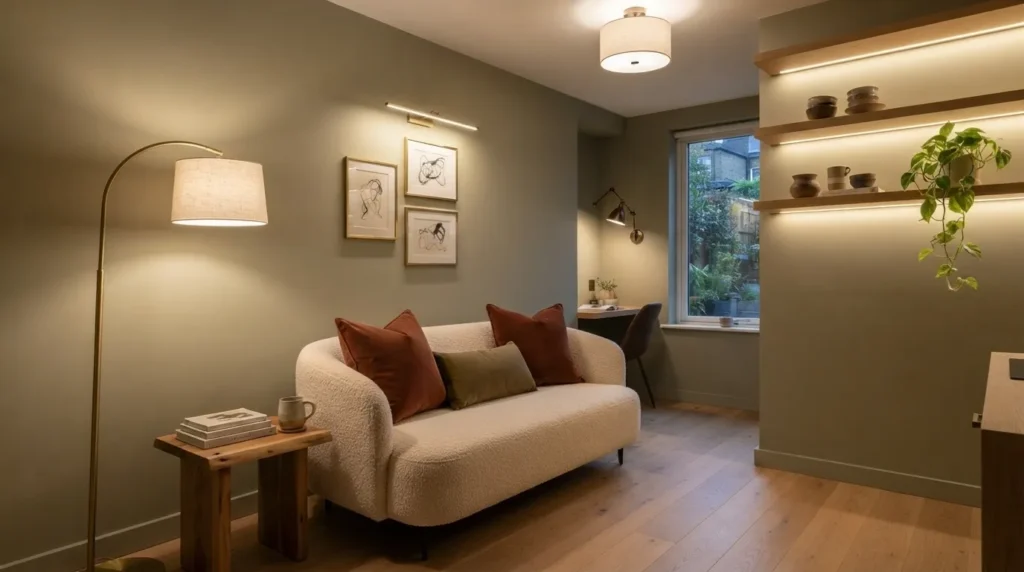
Good lighting can make a small living room feel dramatically more welcoming.
Instead of relying on one large ceiling fixture, layer different types of lighting. Combine a ceiling light with a wall sconce, a small table lamp, or a slim floor lamp.
If your side tables are already crowded, wall lighting is particularly useful. It provides atmosphere without demanding another surface.
You can also use lighting to highlight artwork, shelving, or a favorite corner. This draws attention toward carefully chosen features instead of toward the room’s limited dimensions.
As one designer put it, “ambience does not have to be sacrificed” simply because a room is small.
9. Define Different Areas Without Building Walls
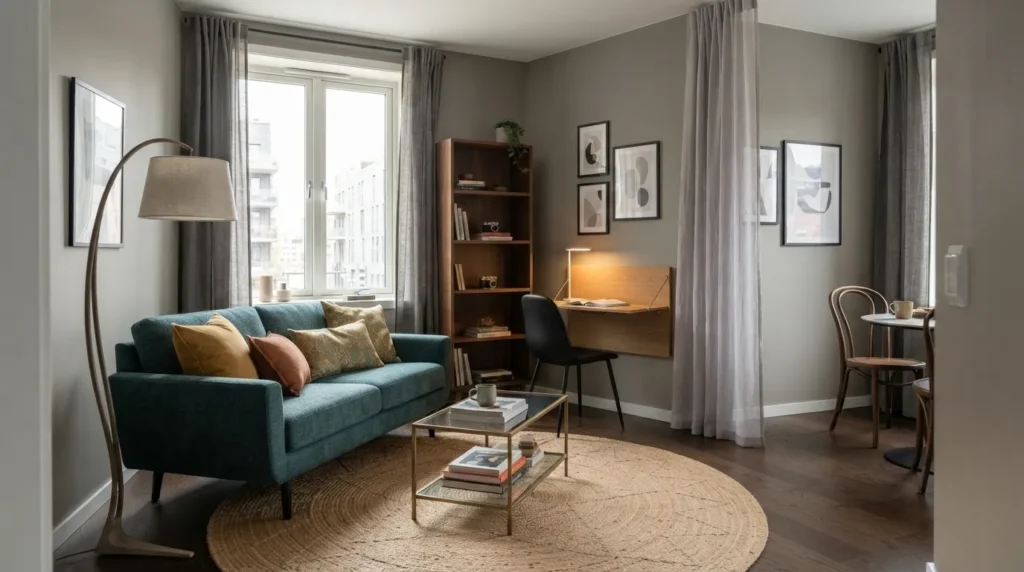
A small living room may need to function as a lounge, workspace, dining area, or reading space. Adding walls would only make it feel smaller, so use visual boundaries instead.
An area rug can define the seating zone. A compact desk can create a work corner. A tall open shelf can subtly separate two areas while allowing light to pass through.
Curtains can also divide a living area from another part of an open plan home without permanently closing it off.
The important thing is to maintain clear walking paths.
“Give the room somewhere to breathe,” rather than pushing every piece of furniture against another piece. Clear pathways can make the entire space feel more open and intentional.
10. Edit Your Decor and Leave Some Empty Space
Here is perhaps the hardest tip of all: you do not need to decorate every surface.
Small rooms can become visually crowded very quickly. Ten tiny decorative objects can often make a space feel busier than three carefully selected pieces.
Choose accessories that genuinely add something. Perhaps it is a large piece of artwork, an interesting vase, a sculptural lamp, or a beautiful plant.
“Empty space is part of the design.”
That does not mean your living room needs to look bare. It simply means every object should have a reason to be there.
Design experts frequently recommend an edited approach in compact rooms because reducing visual clutter creates more breathing room.
Save More When Shopping for Your Small Living Room
Once you have a decorating plan, the next challenge is finding the right pieces without spending more than necessary. This is where The Home Gardenist can be useful.
The Home Gardenist brings together deals, discounts, coupons, and promotions from a wide range of home and garden brands. Its selection includes names such as IKEA, West Elm, Castlery, Arhaus, Home Depot, and Shop Houzz, giving you plenty of places to look when you need furniture, lighting, storage, or decorative accessories.
The site regularly features savings on home products, including sale offers, percentage discounts, free shipping promotions, and brand specific coupon codes. Current listings have included offers such as discounts on sale items, furniture categories, and sitewide purchases, although individual offers and expiration dates can change.
So before buying that compact sofa, mirror, storage ottoman, or wall shelf, it is worth checking The Home Gardenist for a relevant coupon or promotion. A little research before checkout can leave more room in your budget for the pieces that really make your living room feel like home.
Make Small Feel Spacious
Decorating a small living room is not about squeezing more things into less space. It is about making smarter choices.
Choose furniture that works harder. Use your walls. Bring in mirrors and reflective surfaces. Make awkward corners useful. Keep your pathways open and your accessories intentional.
Most importantly, do not assume that a small room has to feel limited.
With the right approach, even a compact living room can feel comfortable, practical, stylish, and distinctly yours. The best decorating ideas for small living room spaces are not about hiding the size of the room. They are about making every inch count.