
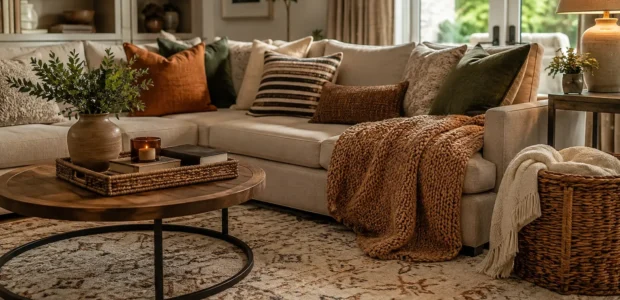

Have you ever walked into a living room that looked beautiful but somehow felt a little cold? The furniture may be stylish, the colors may coordinate perfectly, and yet something seems to be missing.
That missing ingredient is often texture.
“Texture is what makes a room feel lived in,” says the simplest rule of cozy decorating. A soft rug under your feet, a chunky throw across the sofa, and a few inviting pillows can completely change the atmosphere without requiring new furniture or a major renovation.
The secret is knowing how to layer these elements so they feel connected rather than crowded. Here is how to create a warm, comfortable space with thoughtful living room texture layering.
Start With the Rug
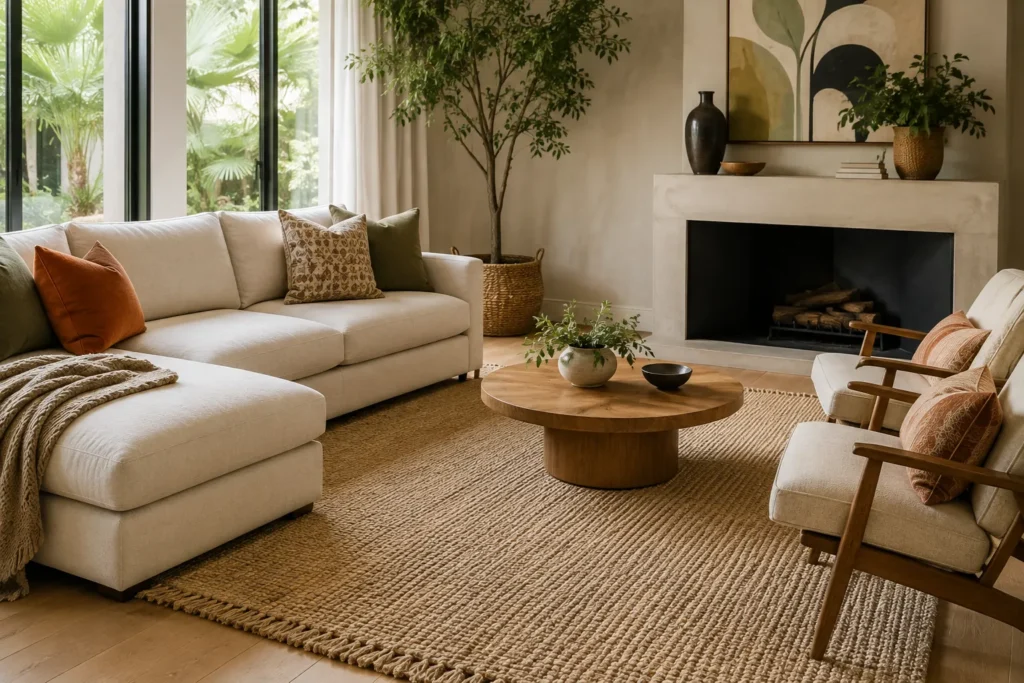
Think of your rug as the foundation of the room. Before you start adding pillows and throws, establish a comfortable base underfoot.
“A rug should bring the seating area together,” rather than looking like a small island floating beneath the coffee table.
For most living rooms, choose a rug large enough for at least the front legs of the sofa and chairs to sit on it. A rug that is too small can make the furniture arrangement feel disconnected, while a properly sized rug helps define the entire seating zone.
Texture matters just as much as size. A flat woven rug can bring structure to a room filled with soft upholstery, while a plush wool rug adds warmth beneath streamlined furniture. Natural materials such as jute can introduce an earthy, relaxed quality.
When it comes to living room rug styling, consider the textures already present. If your sofa is smooth and tailored, a visibly woven rug can provide welcome contrast. If the sofa already has a chunky or nubby finish, a subtler rug may create better balance.
Bring in Throws for Instant Warmth
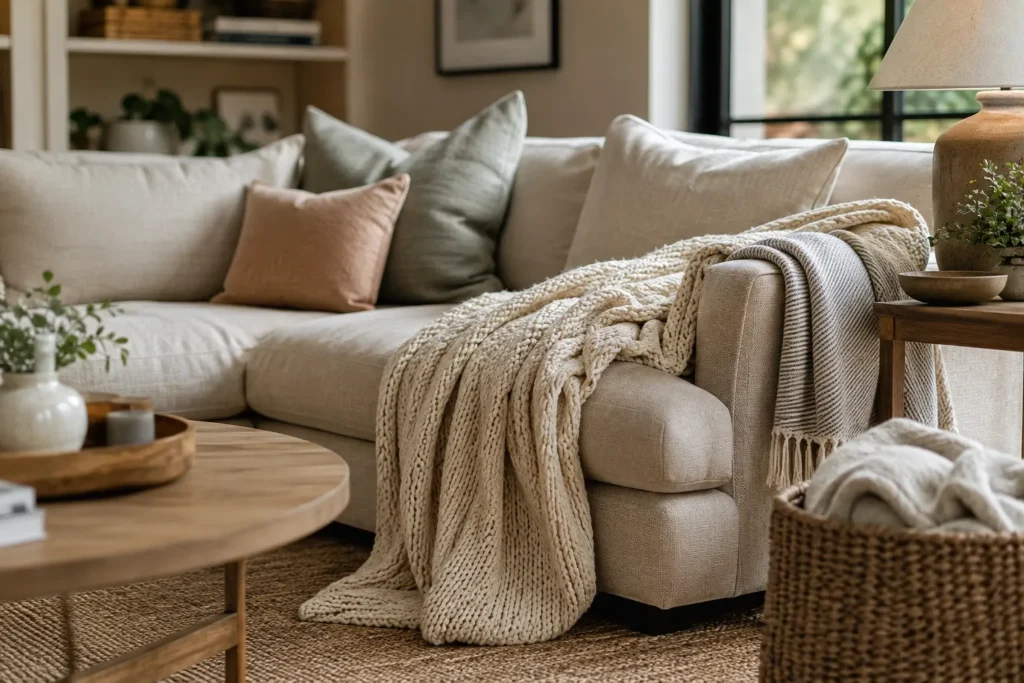
Once the rug establishes your foundation, move upward.
Throws are one of the easiest ways to make a sofa look inviting. They also give you an opportunity to introduce another material without making a permanent change.
“Do not just fold a throw perfectly and forget about it,” is a useful styling philosophy. A little casual movement can make the room feel more relaxed.
Try draping a chunky knit throw over the corner of the sofa. For a tidier look, fold a lightweight cotton or linen throw over the arm. You can also place one loosely across a chaise or in a nearby basket so it is always within reach.
The important thing is variety. Pair a smooth sofa with a chunky knit, or contrast a structured leather sofa with a soft woven throw. The difference between those surfaces is what creates visual depth.
Give the Sofa Personality With Pillows
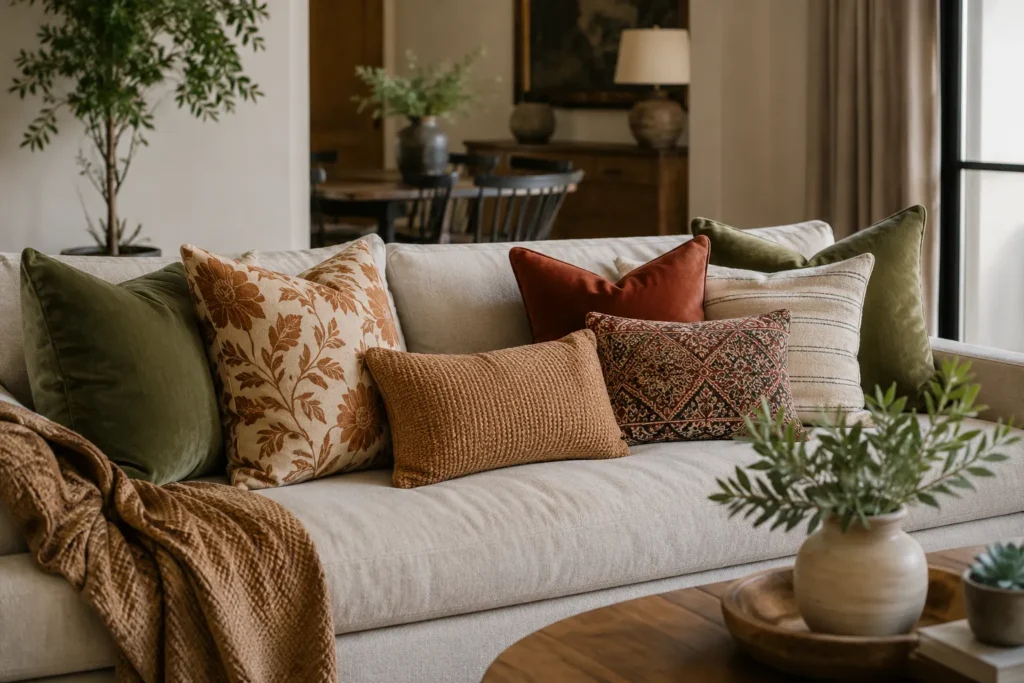
Now comes the fun part.
Throw pillows let you experiment with pattern, color, shape, and fabric without committing to a whole new design scheme. They are also easy to replace when your taste or the season changes.
When mixing throw pillow patterns, start with a common color story. You might choose cream, rust, olive, and warm brown, for example. Once the colors connect, you have more freedom to play with patterns.
Try combining one large scale pattern with a smaller print and a solid textured pillow. A botanical design can work beautifully beside a small geometric pattern, while a plain velvet cushion can give the eye somewhere to rest.
“You do not need every pillow to match,” and that is precisely the point.
Vary the sizes too. Larger pillows can sit toward the back of the arrangement, while smaller cushions or lumbar pillows can add interest toward the front. Mixing velvet, linen, woven cotton, boucle, or embroidered fabrics gives the sofa a richer tactile quality.
Just remember that more does not always mean better. Leave enough space for someone to actually sit down.
Create Contrast With Different Materials
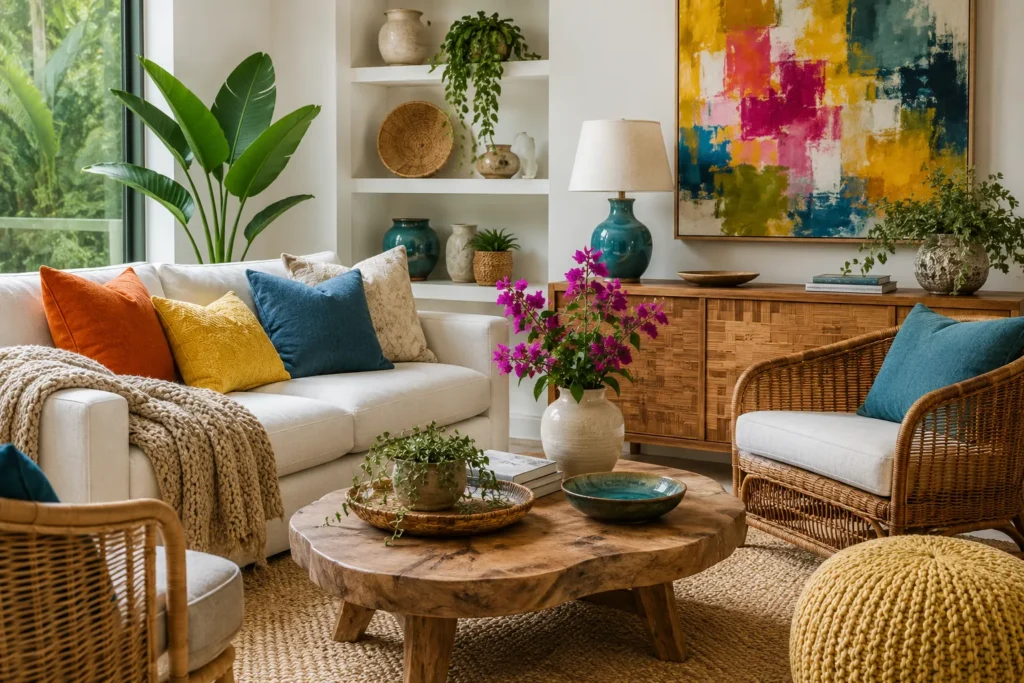
A truly cozy room is rarely built from one texture.
Instead, think about creating a conversation between surfaces. Pair rough with smooth, soft with structured, and matte with subtle sheen.
Imagine a linen sofa with a chunky wool throw, a woven rug, a velvet pillow, and a wooden coffee table. Nothing has to match exactly. Each material simply adds another layer to the overall composition.
This is what turns an ordinary room into a multi textured living room.
Natural materials can be especially useful here. Wood, rattan, jute, stone, ceramic, and woven fabrics can bring warmth into rooms that rely heavily on neutral colors.
And if your palette is already simple, do not worry that the room will look boring. A neutral room with plenty of tactile variation can feel far more interesting than a colorful room where every surface has the same finish.
Keep the Layers Connected
The easiest way to make texture layering look intentional is to repeat something.
“That color appeared on the rug, so bring it back in a pillow,” is a simple trick that designers use all the time.
You do not have to repeat an exact pattern. Instead, repeat a color, material, or visual quality. If your rug contains warm terracotta, introduce a small amount of that shade in a cushion. If you have natural wood furniture, echo its warmth with woven accessories.
This creates continuity without making the room look overly coordinated.
It is also helpful to build from large pieces toward small ones. Begin with the rug, consider the sofa and other major furniture, then add throws, pillows, baskets, and smaller decorative details.
That approach prevents the room from becoming a collection of unrelated accessories.
Make Cozy Decorating More Affordable
Creating a layered living room does not mean you need to spend a fortune on every cushion, rug, and throw. In fact, smaller textile changes can deliver a surprisingly big transformation.
If you are shopping for rugs, furniture, décor, or other home essentials, The Home Gardenist can be useful for finding current discounts and savings from a range of home and garden brands. The site brings together offers from retailers and brands including West Elm, Castlery, Arhaus, IKEA, Home Depot, and Shop Houzz, among others. Its deals include coupons, seasonal promotions, sale offers, and other ways to reduce the cost of a home refresh.
“You do not have to buy everything at full price,” especially when you are building a room gradually. Checking The Home Gardenist before purchasing can help you compare available offers and potentially find discounts on the pieces you already planned to buy. The site also states that it earns commissions through affiliate partnerships, at no additional cost to shoppers, while regularly reviewing and updating its listed offers.
That can make a difference when one room requires several purchases. Saving on the rug might leave room in the budget for better pillows, while a furniture discount could free up money for those finishing touches that make the space feel personal.
Avoid the Most Common Layering Mistakes
Texture layering is about balance, so watch out for a few common mistakes.
First, avoid using too many competing patterns. If the rug is already bold, let the pillows be quieter. Second, do not make every surface heavily textured. A smooth table, simple curtain, or streamlined piece of furniture can provide a visual break.
Finally, resist the urge to fill every empty corner.
“Leave the room somewhere to breathe.”
A cozy space should feel comfortable, not crowded. You want people to notice the textures without feeling overwhelmed by them.
Make Your Living Room Feel Like You
The beauty of texture layering is that there is no single formula you have to follow.
Start with a rug that grounds the room. Add a throw that feels good to touch. Bring in pillows with different fabrics and patterns, then repeat a few colors to tie everything together.
The result should not look perfect in a showroom sense. It should look inviting.
After all, the best living rooms are the ones that make you want to take your shoes off, sink into the sofa, grab a blanket, and stay awhile.