
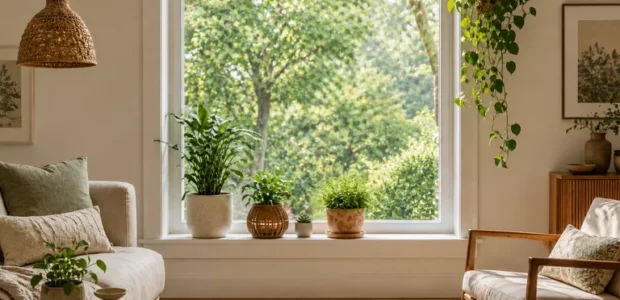

Have you ever walked into a home and felt an instant sense of calm, only to realize it was because of a little greenery sitting by the window? That’s the magic of a windowsill garden. It doesn’t need a big budget, a green thumb, or a spare room. All it needs is a bit of light, a few pots, and a little thought about what goes where.
Here’s the thing though, not every windowsill works the same way. A sill in your sunroom soaks up hours of direct light, while the one in your bathroom might barely get a peek of sun through frosted glass. So before you start window gardening, it helps to think room by room. What looks good in a living room might wilt in a week in a bathroom. What thrives in a sunroom might scorch on a hot kitchen ledge.
In this guide, we’ll walk through how to style windowsill plants for every major room in your home; living room, kitchen, bathroom, bedroom, and sunroom along with the styling details that make a windowsill plant display actually look put together, instead of like a random collection of pots.
First, Get to Know Your Window
Before we get into individual rooms, let’s talk about light for a second, because this is the one thing that decides whether your windowsill planting survives or struggles.
- South-facing windows get the most light, often several hours of direct sun. This is where your sun-worshippers go cacti, succulents, and other plants that love heat.
- East-facing windows get gentle morning sun. This is a sweet spot for a lot of houseplants because the light is bright but not harsh.
- West-facing windows get strong afternoon sun, which can be intense in summer. Great for sun-lovers, but leafy tropicals may need a sheer curtain to soften the glare.
- North-facing windows get the least direct light. This is where your shade-tolerant plants think ferns, pothos, or peace lilies will be happiest.
One more practical thing: check for drafts and radiators near your sill. Plants don’t love sudden temperature swings, so a spot right above a heater or next to a window you crack open often isn’t ideal. And always keep drainage in mind a saucer under your pots will save your paint and your sanity.
Now let’s get into the fun part, styling each room.
Living Room Windowsills: Where Style Takes the Lead
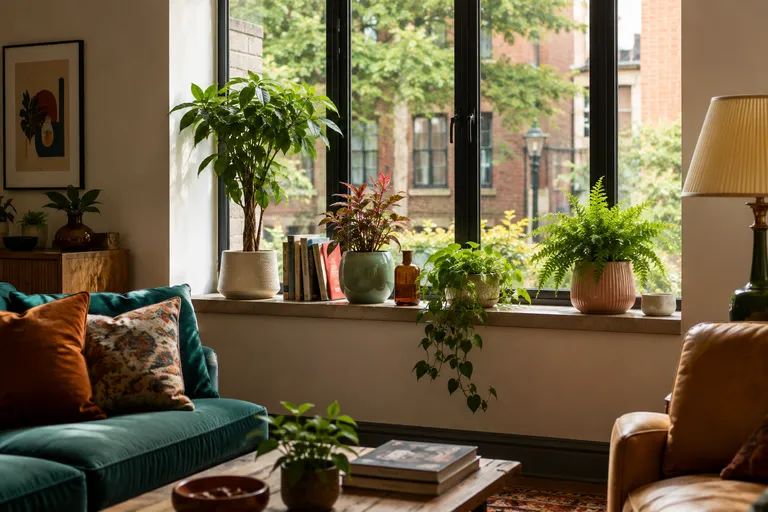
The living room is usually where people notice your windowsill garden first, so this is the spot to think about visual impact as much as plant health.
A common mistake people make here is treating the windowsill like a storage shelf, cramming it with every plant they own. Don’t do that. Instead, think in terms of grouping. Odd numbers three, five, seven tend to look more natural and intentional than even ones. Mix up the heights too: a tall snake plant at one end, a medium trailing pothos in the middle, and a small potted succulent at the other end creates a little visual rhythm instead of a flat, boring line.
If your living room window faces east or west, you’ve got a lot of flexibility. A Pilea peperomioides (sometimes called the “pancake plant” or missionary plant) looks striking with its round, coin-shaped leaves and does beautifully in bright, indirect light. Trailing pothos is another favorite here; let it spill gently over the edge of the sill for that soft, relaxed look.
Don’t limit yourself to just plants either. Mix in a small stack of books, a ceramic vase, or a slim candle holder between your pots. This is what makes a windowsill display feel curated rather than accidental. And remember to leave gaps, a windowsill with too many objects blocks light and looks cluttered. Give each grouping a little breathing room so the eye can move naturally across the space.
Kitchen Windowsills: Where Practical Meets Pretty
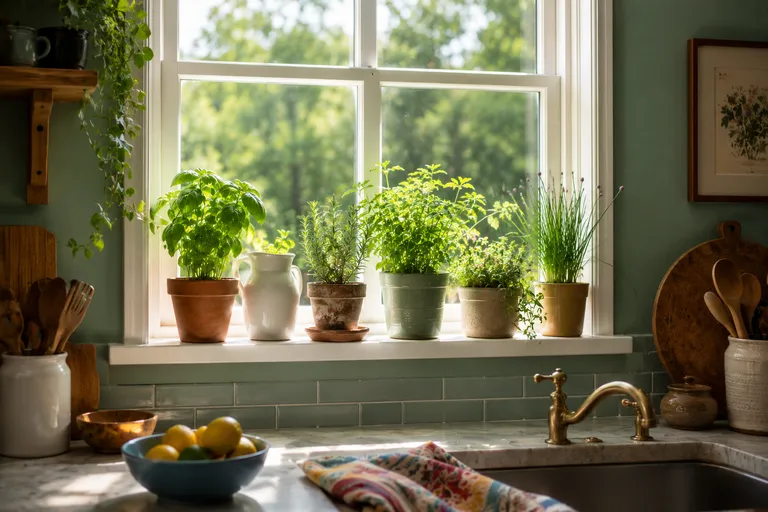
If there’s one windowsill in the house that should actually earn its keep, it’s the kitchen one. This is prime real estate for a herb garden fresh basil, rosemary, thyme, and chives are all happy growing in small pots, and having them within arm’s reach while you cook is genuinely satisfying.
For best results, place your herbs on a window that gets at least a few hours of sunlight a day. Basil in particular loves warmth and light, so if your kitchen window faces south or west, you’re in good shape. If you’re working with a shadier north-facing kitchen window, stick to hardier herbs like mint or chives, which tolerate lower light better.
Styling-wise, this is where you can lean into a cozy, lived-in look. Vintage crocks, mismatched-but-coordinated terracotta pots, or even old mason jars work beautifully here. Try grouping your herbs in odd numbers again, and vary the container heights slightly, you can literally just place a small pot on an upturned saucer to lift it. A lot of kitchen windowsill gardens also mix in a small pitcher or jug alongside the plants, which softens the look and ties it back into the rest of the kitchen decor.
One tip that makes a real difference: keep your pots slightly separated from one another instead of pushing them into a tight row. It looks more relaxed and also means healthier plants because good airflow matters just as much as good light.
Bathroom Windowsills: Turning Steam Into a Green Advantage
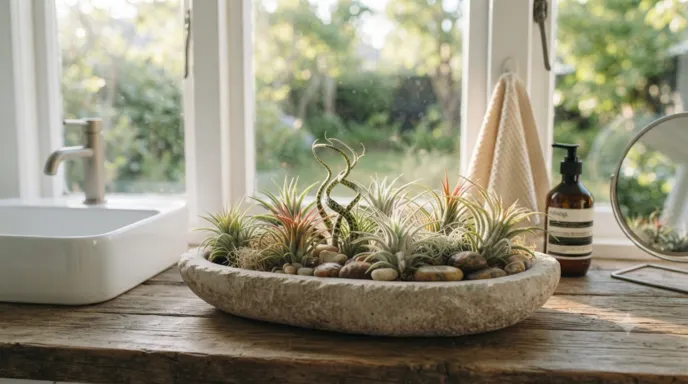
Here’s something a lot of people don’t realize, your bathroom is actually one of the best rooms in the house for certain plants, thanks to the humidity. The catch is that bathroom windows often let in less light than you’d think, especially if there’s frosted glass for privacy.
So the trick with bathroom windowsill planting is matching plants to the humidity-loves-light-not-so-much combo. Ferns are the obvious pick, a bird’s nest fern or a small Boston fern will happily soak up the moisture from your showers while tolerating relatively low light. Peace lilies are another great option; they love humidity, handle shade well, and will droop slightly to let you know when they’re thirsty, which makes them practically foolproof.
If your bathroom window does get a decent amount of light, you can get a little more adventurous. Orchids and bromeliads both love bright, filtered light paired with humidity, and they bring a genuinely spa-like feel to the space. Calathea, with its patterned leaves, also looks stunning against white bathroom tile.
For styling, keep things simple and clean. Glass vases or containers work really well in bathrooms because they play nicely with all that reflective tile and chrome. A small cluster of air plants sitting on a dish, or a single fern in a sleek pot, often looks better than a crowded arrangement, bathrooms tend to benefit from a more minimal, spa-like styling approach rather than the “more is more” look that works in a living room.
Bedroom Windowsills: Calm, Not Cluttered
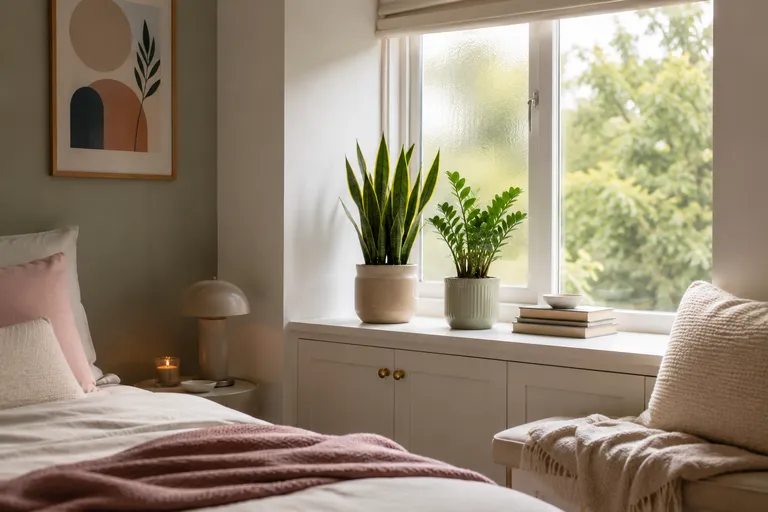
The bedroom is where you want your windowsill garden to feel soothing rather than busy. This isn’t the place for a big, dramatic plant display, it’s more about a few well-chosen plants that add life to the room without competing with your sleep space.
Snake plants and ZZ plants are ideal here because they’re incredibly low-maintenance and tolerate a range of light conditions, so you don’t have to fuss over them right before bed. If your bedroom window gets good light, a small peace lily adds a bit of gentle greenery and is known for being fairly forgiving if you forget to water it once in a while which, let’s be honest, happens to everyone.
If you have a window seat or a wider ledge, this is a great spot to extend the styling beyond just plants. A folded throw blanket, a small stack of your current reads, and a plant or two together create a cozy little nook that invites you to sit and unwind. Some people even build out a simple DIY shelf under the window to double their planting space, perfect if your bedroom window doesn’t get much natural depth.
Keep the color palette soft here. Muted ceramic pots in white, sage, or terracotta tend to suit bedrooms better than bright, busy patterns, which can feel a little too stimulating in a room meant for rest.
Sunroom Windowsills: Go Big With Light
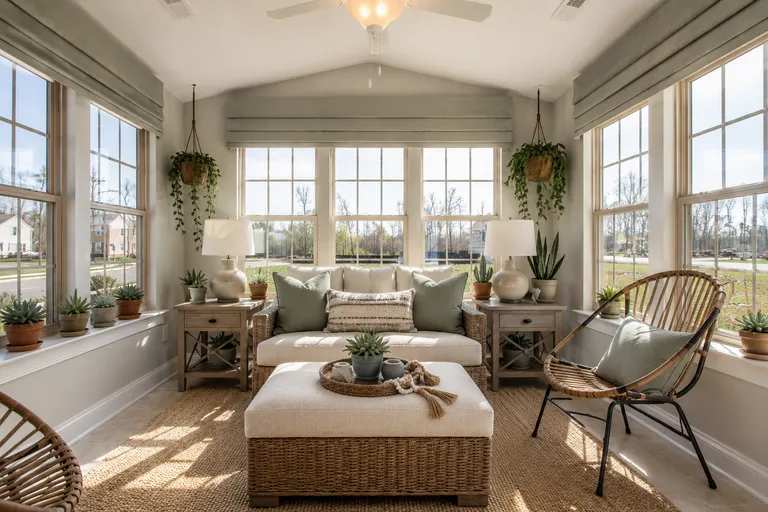
If you’re lucky enough to have a sunroom, consider it your windowsill garden playground. With hours of direct light pouring in, you can finally use all those sun-hungry plants that struggle everywhere else in the house.
Succulents and cacti are the obvious stars here. Because they thrive on neglect and heat, a sunroom ledge is basically their natural habitat. Try grouping a small succulent collection together in matching terracotta pots for a clean, curated look, it’s a simple styling trick that instantly looks intentional rather than thrown together.
Orchids also do wonderfully in a sunroom, especially when grouped rather than displayed as single stems. A cluster of two or three orchids on a sill instantly feels a little luxe, like you’ve styled a corner of a botanical shop. And if you want something a bit more playful, training an ivy plant around the window frame using a small trellis or some soft plant ties creates a natural, living frame around the glass, it’s one of those details that makes a huge visual difference for very little effort.
For the styling itself, lean into materials that feel natural and sun-washed, terracotta, woven jute coasters under your pots, unfinished wood shelving. Since a sunroom already has that bright, airy, outdoor-adjacent feel, your plant styling should lean into that rather than fight against it with anything too formal or glossy.
Quick Care Notes Before You Start
Since we’re talking styling, it’s worth a quick reminder on care too because the prettiest windowsill garden is still one where the plants are actually thriving:
- Always use pots with drainage holes, or at least a layer of gravel at the bottom, and place a saucer underneath to protect your sill.
- Rotate your pots every week or two so plants grow evenly instead of leaning hard toward the light.
- Watch for leaf scorch on very sunny sills in summer, a sheer curtain can soften intense afternoon sun without blocking the view.
- In winter, keep plants away from cold glass and drafty gaps, since sudden chills can stress even hardy varieties.
Bringing It All Together
At the end of the day, styling your windowsills for plants isn’t about getting everything perfect. It’s about paying a little attention to what each room needs light, humidity, mood and picking plants & containers that fit naturally into that space. Start with just one window if the whole idea feels like a lot. Pick up a small pot, find a sunny (or shady) spot, and see how it feels.
Once you get one windowsill looking right, you’ll probably want to do the next one. And before you know it, your whole home will have that quiet, green, lived-in feeling that makes a house feel like yours.
As you continue building out your windowsill garden, having the right pots, stands, and little styling extras can make all the difference. At The Home Gardenist, we’re passionate about helping you make the most of every space in your home, with practical ideas, inspiring decor tips, and carefully selected products that combine style with function. From space-saving plant stands to the perfect pots for every room, explore our latest picks to help your windows look just as good as they feel.