
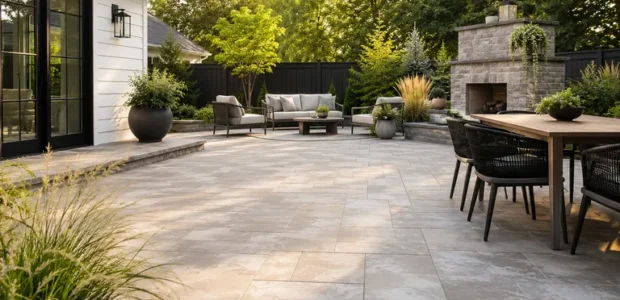

A patio is supposed to be the place where you kick off your shoes on a Saturday morning, drink your coffee, and not think about a single chore. But that’s not how it works out for a lot of homeowners. They pick a material because it looked good in a magazine, and two summers later they’re out there every weekend scrubbing stains, pulling weeds out of the joints, or resealing a surface that’s already starting to fade.
However, there are plenty of low maintenance patio materials that hold their color, resist stains, and barely ask anything of you beyond an occasional rinse. This guide walks you through the best ones, what they cost, and how to figure out which one actually fits your yard, your climate, and your budget.
What Actually Makes a Patio Material “Low Maintenance”?
Before jumping into the list, it helps to know what you’re really evaluating. When people say a patio material is low maintenance, they usually mean it checks most of these boxes:
- It resists stains. Wine, grease, mud, it wipes off instead of soaking in.
- It doesn’t need frequent sealing. Some materials need resealing every year or two; others practically never need it.
- It holds up to weather. Sun, rain, freeze-thaw cycles, and humidity shouldn’t crack it, fade it, or grow algae on it.
- It’s easy to clean. Soap and water or a quick pass with a pressure washer should be enough.
- It doesn’t invite weeds. Gaps and joints are where weeds love to grow, so tighter, denser materials tend to win here.
Keep these five things in mind as you read, because the “best” material for patios really depends on which of these matters most to you.
The Best Patio Materials, Ranked by Beauty and Ease of Care
Here’s the rundown of the most popular options, along with the honest pros and cons of each one.
1. Concrete
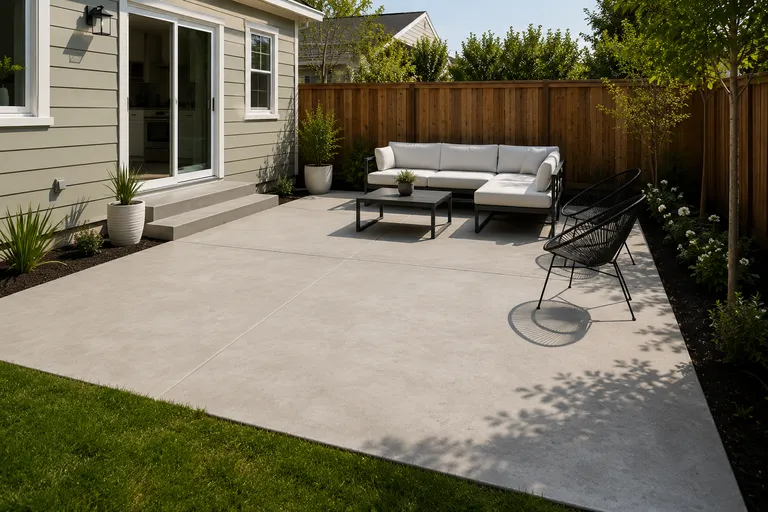
Concrete is the material most people default to, and for good reason. It’s affordable, it goes down fast, and once it’s sealed, it barely needs anything from you beyond a hose-down now and then. Poured concrete used to have a reputation for looking plain, but that’s changed a lot; stamped and stained concrete can mimic the look of stone, brick, or tile at a fraction of the price.
The catch is that concrete can crack over time, especially in areas with harsh freeze-thaw cycles, and it needs resealing every few years to stay stain-resistant. Still, for the price, it’s hard to beat.
- Best for: budget-conscious homeowners who want a clean, modern look.
- Cost: low to moderate.
2. Concrete Pavers
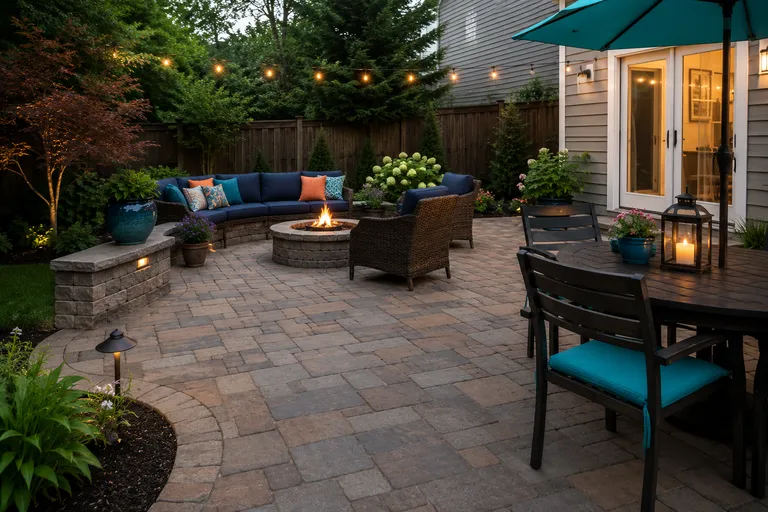
If concrete is the classic choice, pavers are the upgrade most people land on next. They’re individual units, so if one cracks or stains badly, you can just pop it out and replace it, no need to redo the whole patio. That alone makes them one of the more practical patio materials out there.
Pavers come in a huge range of colors, shapes, and textures, so you’re not stuck with one look. Just know that the sand-filled joints between them can eventually let weeds sneak through if you don’t stay on top of it, though polymeric sand largely solves that problem these days.
- Best for: homeowners who want flexibility in design and easy repairs.
- Cost:
3. Porcelain Pavers
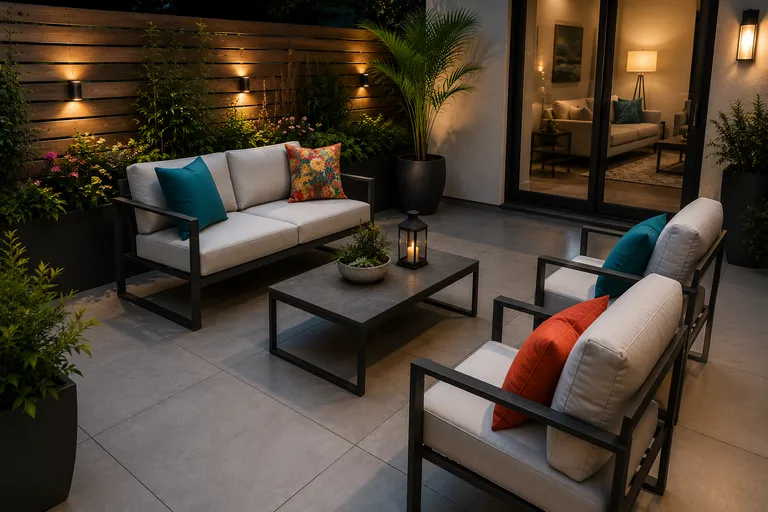
If near-zero maintenance is your top priority, porcelain is probably your answer. It’s fired at extremely high temperatures, which makes it dense and almost non-porous. That means it barely absorbs water, resists staining almost completely, and doesn’t need sealing ever. A simple soap-and-water wipe-down keeps it looking new.
Porcelain also does a convincing job of mimicking wood, stone, or concrete, so you get the high-end look without the high-end upkeep. The downside is the price tag, it costs more upfront than concrete or basic pavers, and large-format tiles need a properly prepared base or they can crack.
- Best for: homeowners who want a premium, modern look with almost no ongoing care.
- Cost: higher, but the least amount of upkeep of any material for patio use.
4. Natural Stone (Flagstone, Bluestone, Travertine, Granite)
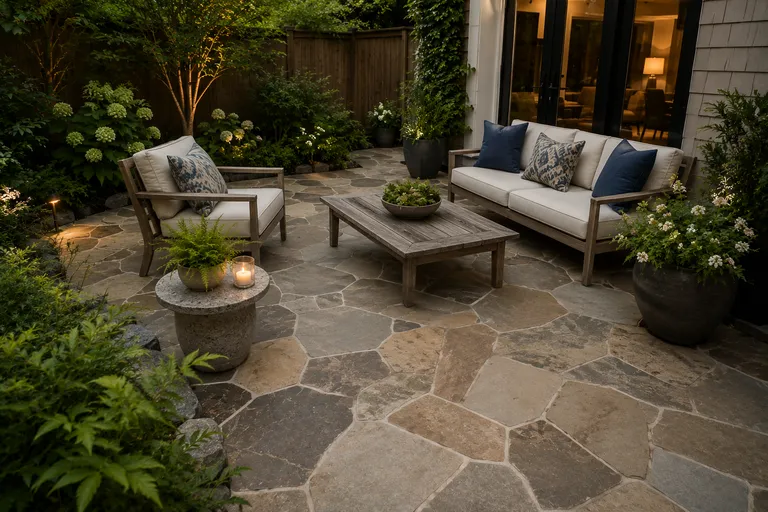
Natural stone is the material people usually mean when they say “timeless.” Flagstone and bluestone give you that organic, textured look that pairs beautifully with landscaping, while travertine and granite lean more polished and refined. Travertine in particular is popular around pools because it stays cooler underfoot and has a naturally slip-resistant texture.
Stone does need periodic sealing to prevent staining, and it’s the priciest option on this list since it has to be quarried rather than manufactured. But if you’re after a patio that looks like it belongs there and not like it was installed last spring, the stone earns its cost.
- Best for: homeowners who want a natural, high-end look and don’t mind the investment.
- Cost:
5. Composite Decking
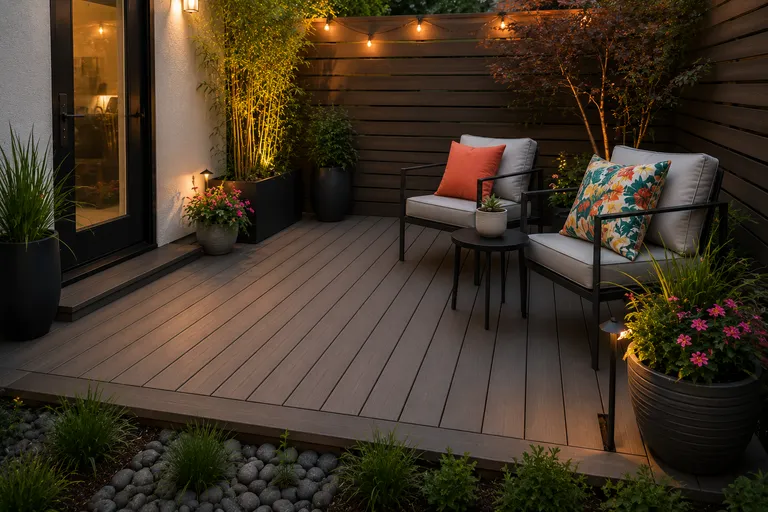
Technically a decking product, composite boards are increasingly used at ground level as a patio alternative, especially for homes that want a wood look without the wood problems. Made from a blend of recycled plastic and wood fibers, composite doesn’t needs staining, sealing, or sanding. It resists rot, insects, and fading, and a simple soap-and-water clean is all it asks for.
It costs more upfront than natural wood, but you make that back quickly in time saved — no annual refinishing, no splinters, no warping.
- Best for: anyone who loves the warmth of a wood patio but not the yearly maintenance.
- Cost: moderate to high.
6. Gravel and Decomposed Granite
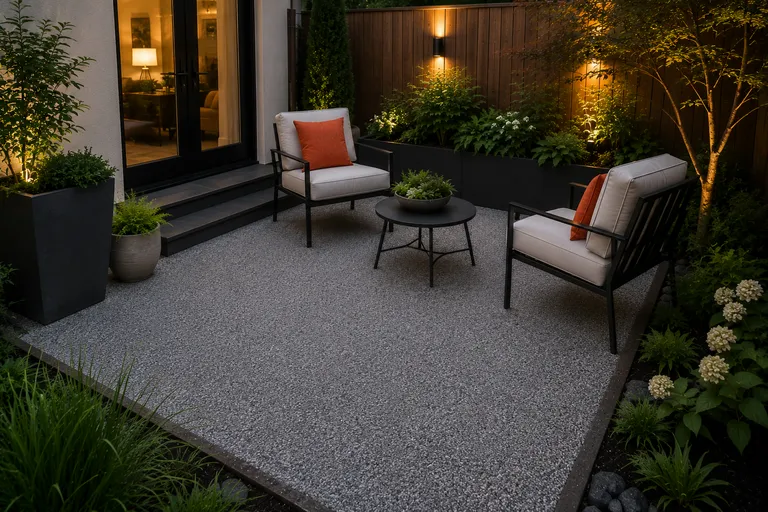
If you want the cheapest material for a patio, gravel and decomposed granite (DG) are hard to beat. Both are simple to install, drain water beautifully, and give off a relaxed, natural feel that works well in garden-style or desert-inspired yards. Maintenance is minimal mostly just raking it back into place occasionally and topping it off every few years.
The trade-off is that gravel scatters, isn’t great to walk on barefoot, and needs a solid edge restraint (stone or metal border) to keep it from migrating into your lawn. DG compacts a little better and feels firmer underfoot, but it can still track indoors if you’re not careful.
If you don’t want it scattering at all, you can glue it down with a resin binder instead. It’ll cost you a few more bucks, but you get a locked-in patio flooring.
- Best for: informal spaces, tight budgets, and areas that need good drainage.
- Cost: lowest on this list.
7. Brick
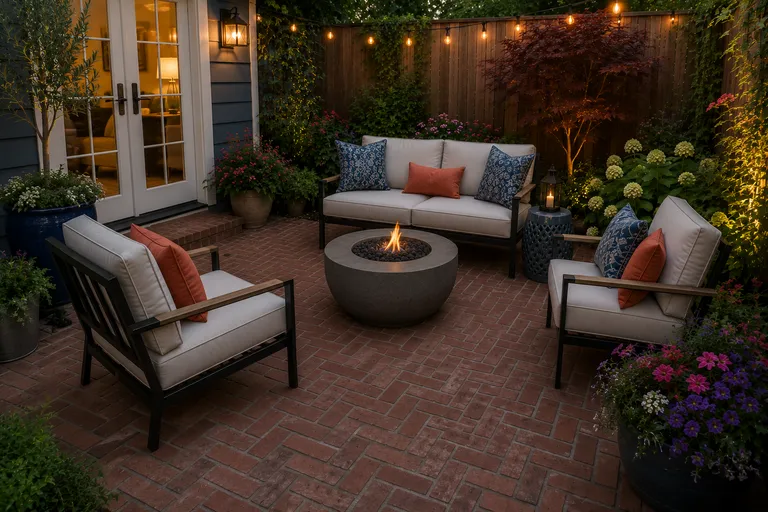
Brick has been used for patios for centuries, and it’s stuck around because it works. It’s durable, it doesn’t fade, and because it’s laid in individual units, repairs are simple; lift the damaged brick, drop in a new one, done. It also gives you that classic, warm look that pairs well with almost any home style.
The main maintenance concern is the joints between bricks, which can grow moss or let weeds through over time if they’re not filled properly. A little polymeric sand in the joints goes a long way toward solving that.
- Best for: traditional or historic-style homes that want durability with real character.
- Cost:
Cost Comparison at a Glance
If you’re trying to figure out the most affordable patio material for your project, here’s a rough side-by-side to help you compare:
| Material | Cost (per sq. ft.) | Maintenance Level | Best Look For |
| Gravel / Decomposed Granite | $ | Very Low | Rustic, informal spaces |
| Concrete (poured/stamped) | $–$$ | Low | Modern, minimalist |
| Brick | $$ | Low | Traditional, classic |
| Concrete Pavers | $$ | Low | Versatile, most styles |
| Composite Decking | $$–$$$ | Very Low | Wood-look without upkeep |
| Porcelain Pavers | $$$ | Very Low | Contemporary, poolside |
| Natural Stone | $$$–$$$$ | Low–Moderate | Timeless, upscale |
Keep in mind these numbers shift a lot based on your region, installer, and site prep needs, so treat this as a general guide rather than a quote.
How to Choose the Best Material for Your Patio
With so many good options, picking the best patio material really comes down to answering three questions honestly:
- What’s your climate like? If you deal with freeze-thaw cycles, stick with materials that handle expansion and contraction well; pavers, brick, and porcelain all do this better than a single poured concrete slab.
- What’s your actual budget, including upkeep? A cheap material that needs yearly sealing and repairs might cost you more over ten years than a pricier one that needs almost nothing. Think past the installation invoice.
- What look are you going for? There’s no point picking the lowest-maintenance material for patios if you hate the way it looks every time you step outside. Narrow your list to two or three materials that fit your style, then compare maintenance from there.
Maintenance Tips to Keep Any Patio Looking Its Best
Even the lowest-maintenance materials benefit from a little routine care:
- Clean regularly, not seasonally. A quick sweep or rinse every few weeks prevents buildup that’s much harder to remove later.
- Reseal on schedule. Concrete, brick, and natural stone typically need resealing every two to three years.
- Refresh joint sand. For pavers and brick, top off polymeric sand in the joints every year or two to keep weeds from taking hold.
- Invest in a compact pressure washer. Light, frequent cleanings with a pressure washer keep any surface looking fresh without heavy scrubbing.
Final Thoughts
There’s no single “best” material for every patio — it really depends on your climate, your style, and how much you want to spend both now and later. If you want the cheapest possible option, gravel or decomposed granite will get you outside fastest for the least money.
If you want something that looks great and asks almost nothing of you for the next twenty years, porcelain or composite decking are worth the extra investment. And if you just want a reliable, good-looking patio material that splits the difference, concrete pavers or brick are hard to go wrong with.
Whichever direction you go, the goal is the same: a patio you actually get to enjoy, instead of one more thing on your weekend to-do list.
As you work on creating a more beautiful, low-maintenance outdoor space, having the right materials on hand at the right price makes a difference. At The Home Gardenist, we want to make you make the most of your yard with practical ideas, inspiring outdoor living tips, and curated deals on the products that combine style with durability.
From sealants and edge restraints to pavers, gravel binders, and outdoor décor essentials, we track exclusive coupons, promo codes, and seasonal discounts so you can build a patio that’s not only beautiful but also easier to maintain, all without overspending.