
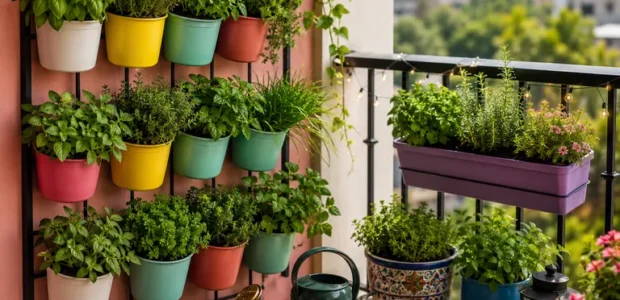

A vertical herb garden lets you grow a surprising number of herbs in a small space. Instead of lining your balcony with bulky pots, you simply grow upwards using shelves, hanging planters, wall pockets, or railing planters. It’s an easy way to turn even the smallest outdoor corner into a lush, productive space.
Whether you’re planning a vertical outdoor herb garden for the first time or looking to upgrade your existing balcony herb garden, these practical tips will help you grow healthy herbs that you’ll actually use every day.
1. Start by Understanding Your Balcony
Before you buy pots or seeds, spend a day observing your balcony.
It might sound simple, but knowing how much sunlight your space receives will save you a lot of frustration later. Most herbs love sunshine, but not all of them need the same amount.
Take note of:
- How many hours of direct sunlight your balcony gets.
- Whether it faces north, south, east, or west.
- If nearby buildings create shade.
- Whether strong winds hit your balcony regularly.
Once you understand your balcony’s conditions, choosing the right plants becomes much easier.
2. Choose a Vertical Garden That Matches Your Space
Now comes the fun part—deciding how you want your vertical herb garden balcony to look.
Don’t assume you need expensive gardening equipment. Many vertical systems work beautifully in small apartments.
Some popular options include:
- Wall-mounted planters
- Hanging pots
- Fabric pocket planters
- Tiered plant stands
- Wooden ladder shelves
- Balcony railing planters
- Freestanding vertical towers
If you’re renting, choose freestanding shelves or hanging planters that don’t require drilling into walls.
Also, think about convenience. You’ll be watering and harvesting these herbs regularly, so make sure every planter is easy to reach.
3. Grow Herbs You’ll Actually Cook With
One of the biggest mistakes beginners make is growing herbs simply because they look attractive.
Instead, ask yourself a simple question:
“Which herbs do I use every week?”
If you’re cooking daily, your herb garden in balcony should make your life easier.
Some of the most useful herbs include:
- Cilantro
- Mint
- Spring onions
- Basil
- Parsley
- Chives
- Oregano
- Rosemary
- Thyme
- Dill
Imagine making pasta and picking fresh basil just before serving, or adding freshly chopped spring onions to fried rice without running to the grocery store.
That’s when your garden starts paying for itself.
4. Know Which Herbs to Grow from Seeds and Which to Buy as Plants
This is something many gardening guides don’t explain.
Not every herb should be started the same way.
Some herbs grow quickly from seeds, while others establish much faster from cuttings or young plants.
Best herbs to grow from seeds
- Coriander
- Basil
- Dill
- Parsley
Seeds are affordable and allow you to grow several plants at once. If you’re patient, they’re a great option.
Herbs that grow better from cuttings or nursery plants
- Mint
- Rosemary
- Oregano
- Thyme
These herbs can take a long time to grow from seed, so buying a healthy plant is usually the easier choice.
Don’t throw away kitchen scraps
Some everyday vegetables can become part of your balcony vertical herb garden. Simply place the roots of spring onions in water, and they’ll start producing fresh green shoots within days. You can also regrow garlic greens and lemongrass using the same method.
It’s an easy, budget-friendly way to keep your garden growing.
5. Use Lightweight Pots and Good Potting Mix
Balconies have weight limits, so choosing lightweight containers is important. Plastic, resin, or fabric grow bags are usually better than heavy ceramic pots.
Just as important is what’s inside the pot. Avoid using regular garden soil because it becomes compacted and drains poorly. Instead, use a quality potting mix containing ingredients like:
- Coco peat
- Compost
- Perlite
- Vermicompost
This combination keeps the soil light, allows roots to breathe, and helps retain just enough moisture without becoming waterlogged. Most herbs dislike sitting in wet soil, so always choose pots with proper drainage holes.
6. Arrange Herbs According to Their Growing Needs
Don’t place herbs randomly. Arrange them based on sunlight, height, and watering needs.
For example:
Top shelves
- Basil
- Rosemary
- Thyme
- Oregano
These herbs love full sun.
Middle shelves
- Parsley
- Chives
- Dill
These enjoy moderate sunlight.
Lower shelves
- Mint
- Coriander (during warmer months)
- Lemon balm
These appreciate slightly cooler conditions.
Grouping herbs with similar watering needs also saves time and helps prevent overwatering.
7. Water Smart and Protect Your Herbs from Wind
A vertical outdoor herb garden dries out faster than regular pots because air circulates around every planter. Instead of watering on a fixed schedule, check the soil first. Stick your finger about an inch into the soil. If it feels dry, it’s time to water.
Morning is the best time because plants absorb moisture before the afternoon heat. If your balcony is windy—which is common in apartment buildings—consider adding a bamboo screen, outdoor fabric, or a simple privacy panel.
Strong winds don’t just damage plants; they also dry out the soil much faster. A small windbreak can make a noticeable difference.
8. Replace Seasonal Herbs Throughout the Year
Here’s a tip many beginners overlook. Your herb garden on a balcony doesn’t have to stay the same all year.
Some herbs naturally thrive in cooler months, while others perform much better in warm weather.
Instead of leaving empty pots after a plant finishes its season, replace it with another herb that’s better suited to the upcoming weather.
For example:
Cool-season herbs
- Coriander
- Parsley
- Dill
- Chives
Warm-season herbs
- Basil
- Mint
- Oregano
- Rosemary
- Thyme
Think of your garden as something that changes with the seasons, just like your wardrobe.
Rotating herbs keeps your balcony looking fresh while ensuring you always have something ready to harvest.
9. Harvest Often to Encourage More Growth
Many people hesitate to cut their herbs because they don’t want to damage the plant. Ironically, harvesting is exactly what helps herbs grow better. Regular trimming encourages plants to become fuller and bushier.
A few simple rules:
- Harvest little and often.
- Never remove more than one-third of the plant.
- Pinch off basil flowers as soon as they appear.
- Trim mint regularly to prevent it from becoming leggy.
- Remove yellow or damaged leaves whenever you see them.
The more consistently you harvest, the more your herbs will reward you with fresh growth.
10. Refresh Your Garden Every Few Months
Every few months, take some time to inspect your garden.
Ask yourself:
- Does the soil still drain well?
- Are any herbs becoming woody?
- Are pests hiding under the leaves?
- Do some pots receive much more sunlight than others?
Replace tired plants, rotate pots occasionally, and top up the soil with fresh compost. A little maintenance goes a long way in keeping your vertical herb garden healthy throughout the year.
Final Thoughts
Growing an herb garden doesn’t require a backyard or years of gardening experience. With a little planning and the right setup, growing an herb garden on a balcony can be surprisingly simple and incredibly rewarding.
Start small. Pick a handful of herbs you use regularly, choose a vertical setup that fits your space, and don’t be afraid to experiment. As the seasons change, swap out herbs, try new varieties, and keep learning what works best in your balcony’s unique conditions.
Before long, your balcony herb garden won’t just add greenery to your home—it’ll become a practical extension of your kitchen, providing fresh, flavorful herbs whenever you need them.
As your vertical herb garden grows, you’ll probably find yourself adding a few more planters, better gardening tools, quality potting mix, or even decorative accessories to make your balcony feel like a true green retreat. Choosing the right products can make gardening easier, but that doesn’t mean you have to spend a fortune.
At The Home Gardenist, we help you discover trusted home and garden products, carefully selected deals, and seasonal discounts from leading brands—all in one place. Whether you’re looking for stylish planters, practical gardening essentials, outdoor décor, or space-saving accessories, you’ll find reliable recommendations and genuine savings to help you create a beautiful home and garden without overspending.
FAQs
How long does it take for herbs to be ready for harvesting?
Fast-growing herbs like basil, cilantro, and dill can be harvested in 4–8 weeks. Woody herbs such as rosemary and thyme take longer but continue producing for months with proper care.
Can I grow different herbs in the same planter?
Yes, as long as they have similar sunlight and watering needs. Avoid mixing moisture-loving herbs like mint with drought-tolerant herbs like rosemary in the same container.
How can I keep pests away from my balcony herb garden naturally?
Inspect your plants regularly, remove damaged leaves, and spray a mild neem oil solution if needed. Good airflow and healthy plants also help reduce pest problems.
Can herbs survive if I’m away for a few days?
Yes. Water them thoroughly before leaving, move them out of harsh afternoon sun if possible, and use self-watering pots or watering spikes for trips lasting more than two or three days.
Do herbs need to be repotted as they grow?
Yes. If roots start growing through the drainage holes or the plant becomes root-bound, move it to a slightly larger pot to encourage healthy growth and better harvests.