
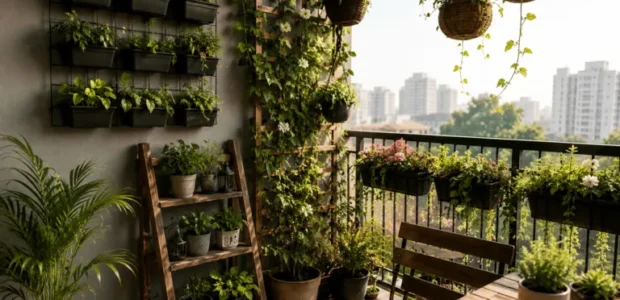

Living in an apartment, if you’ve ever looked at your balcony and thought, “I want more plants, but I don’t want more clutter,” you’re not alone.
The secret isn’t finding more floor space, it’s making better use of the space you already have. By growing upward instead of outward, you can turn plain walls, railings, and empty corners into beautiful green features that look organized, stylish, and easy to maintain.
Whether you’re creating a cozy herb corner or a lush balcony retreat, these vertical garden ideas help you fit more greenery into less space while keeping everything neat and visually balanced.
The best part? You don’t need a large balcony or a dedicated outdoor area to enjoy apartment gardening. From simple wall planters to creative shelving and hanging baskets, there are plenty of solutions that work as a practical garden for apartments and even the smallest homes.
Before You Start Your Apartment Garden
Before you buy planters and plants, take a few minutes to understand your space. A little planning now will save you plenty of frustration later.
Check How Much Sunlight Your Space Gets
Not every balcony receives the same amount of sunlight. Spend a day observing your space before deciding what to grow.
- Full sun (6–8 hours): Tomatoes, basil, rosemary, lavender, peppers, and succulents.
- Partial sun (3–6 hours): Lettuce, spinach, parsley, mint, strawberries, and begonias.
- Shade (less than 3 hours): Ferns, pothos, peace lilies, and snake plants.
Matching plants to the available light makes them healthier and reduces maintenance.
Think About Weight
Balconies have weight limits. Large ceramic pots filled with wet soil can become surprisingly heavy. Instead, choose lightweight plastic, fiberglass, resin, or fabric planters whenever possible. They’re easier to move and place less stress on your balcony.
Plan for Water Drainage
Nobody wants water dripping onto the neighbor’s balcony below. Use saucers beneath pots, install drainage trays where needed, and avoid overwatering.
Pick a Consistent Style
Choose matching containers, coordinate colors, and repeat similar materials throughout your garden. Even inexpensive planters look elegant when they follow the same style.
Now that you’ve planned your space, it’s time for the fun part—choosing the right vertical garden design.
1. Wall-Mounted Planters
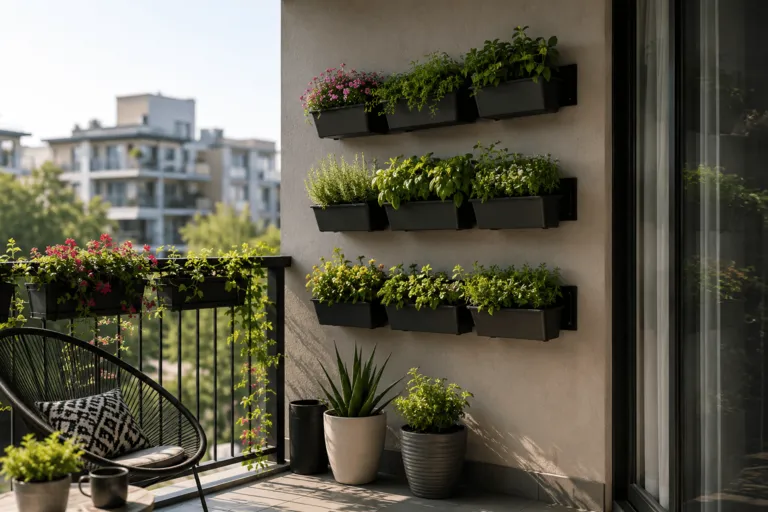
Wall-mounted planters are one of the easiest ways to create a vertical garden without sacrificing floor space. These planters can be arranged in neat rows, staggered patterns, or geometric layouts to suit your style.
Herbs such as basil, parsley, mint, and thyme thrive in wall planters and they’re easy to reach while cooking. Colorful flowering plants also work beautifully if your balcony receives enough sunlight.
The biggest advantage is visual impact. Instead of several pots sitting on the floor, the plants become part of the wall itself, creating a lush focal point that instantly makes the area feel more vibrant.
2. Ceiling-Hung Planters
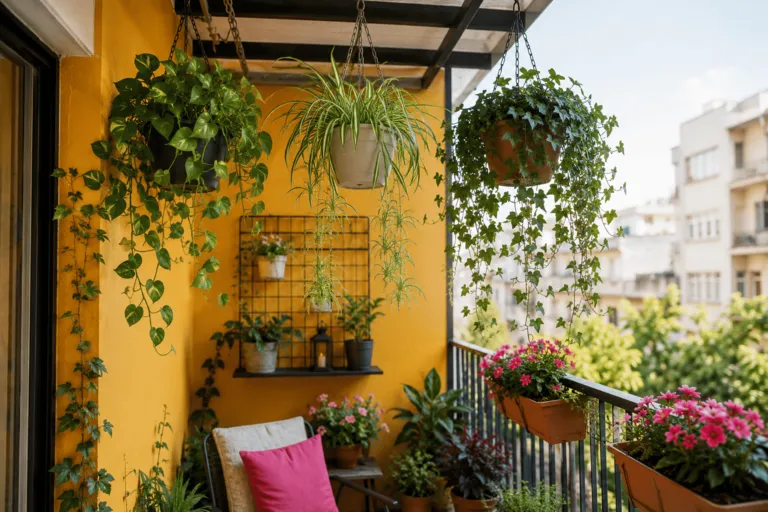
Hanging planters suspended from overhead beams or sturdy hooks free up valuable wall and floor space while drawing the eye upward. This simple trick makes a small balcony appear taller and more spacious.
Trailing plants such as pothos, spider plants, string of pearls, and ivy look especially beautiful when suspended overhead.
Combined with wall planters and railing boxes, ceiling-hung pots help create a layered garden that’s full of character without feeling overcrowded.
3. Wooden Pallet Garden
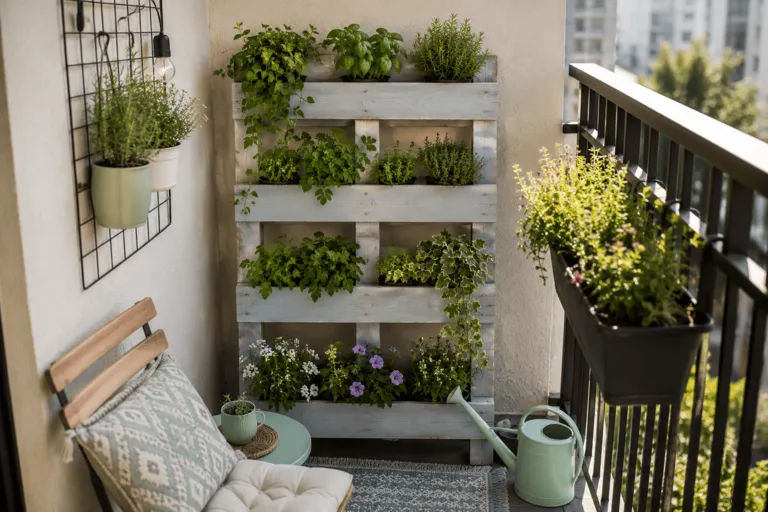
A wooden pallet can become a beautiful vertical planter with just a little creativity.
By attaching small pots or lining the pallet with landscape fabric, you can create multiple planting pockets for herbs, succulents, or flowering plants. Lean the pallet against a wall or secure it upright for extra stability.
This idea works especially well if you enjoy DIY projects. You can paint the pallet to match your outdoor décor or leave the natural wood exposed for a rustic look.
4. Ladder Plant Shelf
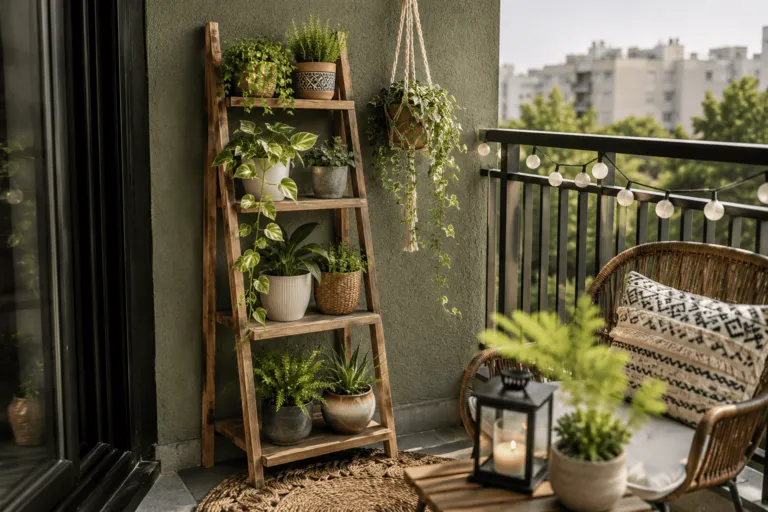
A ladder shelf gives you several levels without drilling holes into the wall. Since it simply leans against a surface, it’s also an excellent choice for renters.
Arrange taller plants on the lower shelves and smaller pots higher up. This creates a balanced display where every plant gets enough light and remains visible.
5. Trellis for Climbing Plants
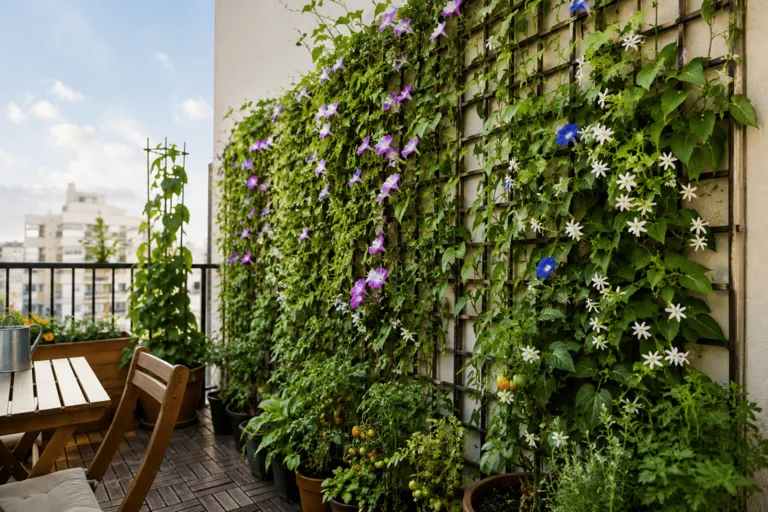
Installing a trellis allows vines to grow upward instead of spreading across your limited floor space. As they mature, they create a beautiful green backdrop that also offers extra privacy.
Flowering climbers like jasmine and morning glory add fragrance and color, while edible plants such as peas, beans, cucumbers, and even cherry tomatoes can be trained upward with gentle support.
The key is to guide young stems early using soft plant ties. Once established, they’ll quickly cover the trellis and transform an ordinary balcony into a lush green wall.
6. Railing Planters
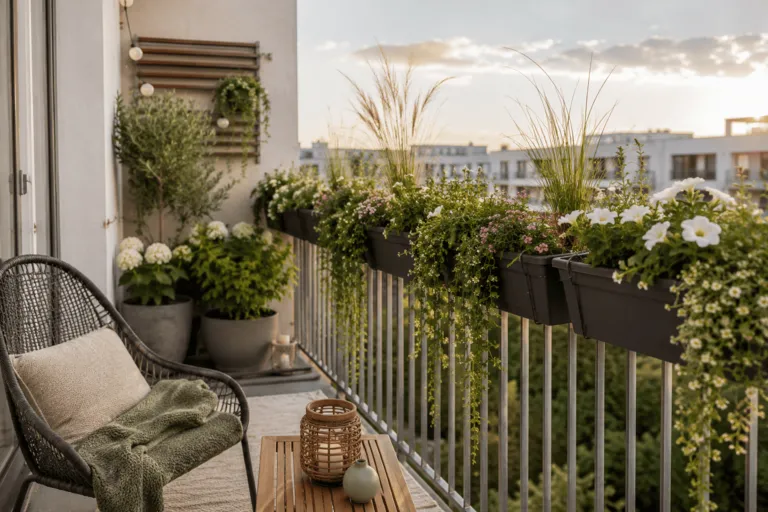
If your balcony has sturdy railings, turn it into a beautiful display of flowers, herbs, or leafy greens. Railing planters hook securely onto the balcony edge, giving you extra planting space without taking up any room on the floor.
For the best effect, stick to one type of planter and repeat the same color palette throughout. Matching planters instantly make the balcony look polished and well organized.
If privacy is another concern, pair railing planters with taller ornamental grasses or climbing plants to create a soft green screen between you and neighboring apartments.
7. Pegboard Garden Wall
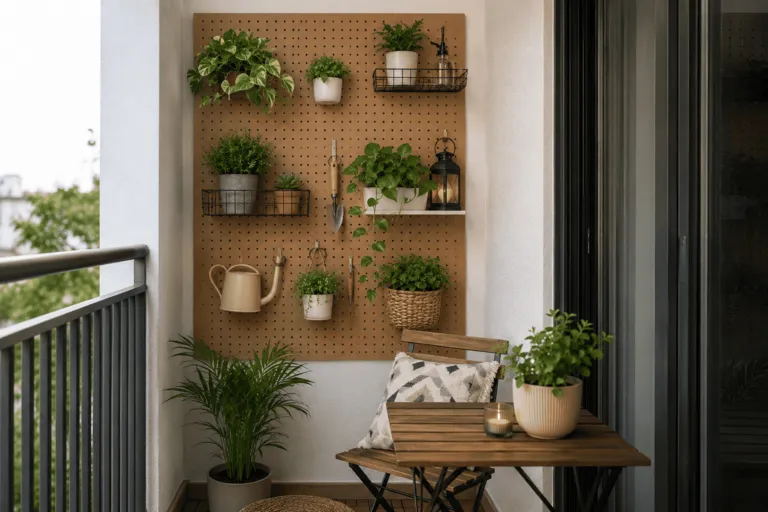
Unlike fixed shelving, pegboards allow you to rearrange planters whenever you like. Hooks, shelves, baskets, and small pots can all be moved around in minutes, giving you complete freedom to refresh your design.
Maybe your herbs need more sunlight this month, or perhaps you’d like flowering plants closer to eye level. With a pegboard, those changes are simple.
This flexibility makes pegboards ideal for renters and beginner gardeners who are still figuring out what works best.
You can even combine plants with decorative items such as small lanterns, watering cans, or garden signs to create a personalized feature wall.
8. Shelving Units Against Balcony Walls
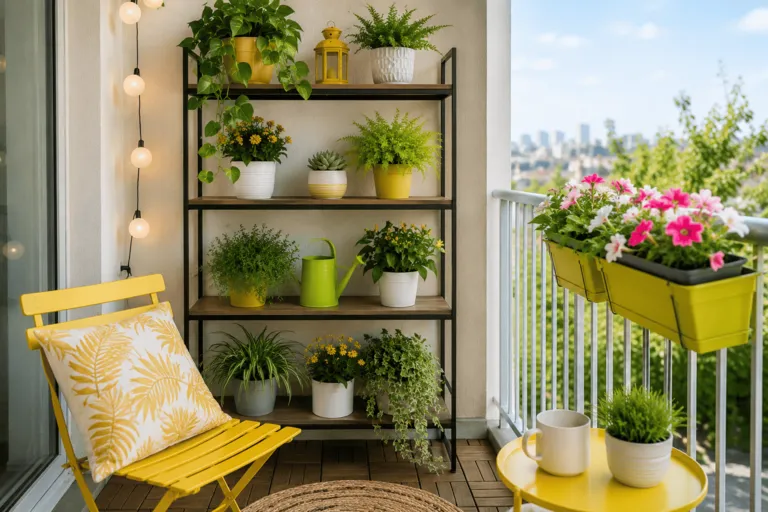
A freestanding shelving unit placed against a balcony wall gives you multiple levels for displaying plants while keeping everything organized. Unlike fixed wall planters, shelves can easily be rearranged or moved if you decide to redesign your space later.
Mix flowering plants with leafy greens to create contrast. For example, place bright petunias beside lush ferns or combine herbs with decorative foliage plants.
Don’t feel like every shelf has to be full. Leaving a little empty space actually makes the display look cleaner and allows each plant to stand out.
Quick Tips to Make Any Vertical Garden Look Beautiful
By now, you’ve probably noticed that the most attractive balconies aren’t necessarily the ones with the most plants. Instead, they’re the ones that feel balanced and thoughtfully arranged.
Here are a few simple tricks that make a big difference:
- Choose one color theme. Matching pots instantly create a cleaner, more elegant appearance.
- Create layers. Mix tall, medium, and trailing plants to add depth.
- Avoid overcrowding. Leave a little breathing room between planters so each plant can stand out.
- Repeat plant varieties. Instead of buying one of everything, repeat the same few plants throughout the display. It creates a cohesive look.
- Hide gardening supplies. Store watering cans, fertilizers, and tools in a small cabinet or decorative storage box.
- Add lighting. A string of warm fairy lights or a small solar lantern can completely transform your balcony in the evening.
Best Plants for Vertical Apartment Gardens
Now that you’ve chosen a garden style, the next step is selecting the right plants.
The healthiest gardens aren’t necessarily the ones with the most expensive plants—they’re the ones where each plant suits the available light and space.
Herbs
Herbs are perfect for apartment gardening because they’re compact, useful, and easy to maintain.
Some great choices include:
- Basil
- Mint
- Parsley
- Coriander
- Thyme
- Oregano
- Chives
- Rosemary
Fresh herbs also mean you’ll always have flavorful ingredients within easy reach.
Vegetables
You don’t need a backyard to grow your own vegetables.
Many compact varieties perform well in vertical gardens, including:
- Lettuce
- Spinach
- Cherry tomatoes
- Radishes
- Green onions
- Peppers
- Strawberries
Use trellises for climbing vegetables and stackable planters for leafy greens.
Flowers
Flowers add color and attract pollinators while making your balcony feel cheerful.
Popular choices include:
- Petunias
- Geraniums
- Marigolds
- Begonias
- Pansies
- Nasturtiums
Choose varieties that match your sunlight conditions for the best results.
Indoor Plants
If your apartment receives limited direct sunlight, don’t worry.
These plants adapt well to indoor spaces:
- Pothos
- Snake Plant
- Spider Plant
- Peace Lily
- Philodendron
- Ferns
- ZZ Plant
These plants also help create a lush look with relatively little maintenance.
Conclusion
Creating a beautiful garden isn’t about having more space, it’s about using your space wisely. By thinking vertically, you can turn even the smallest balcony into a green, organized, and inviting retreat without sacrificing valuable floor space.
Start with a design that suits your home, choose plants that match your sunlight conditions, and build your garden gradually. With these vertical garden ideas, you can create a stylish, low-maintenance garden for apartments on your balconies that brings fresh greenery and a sense of calm to your everyday living.
As you start building your vertical garden, having the right planters, shelves, hanging baskets, and gardening accessories can make the process much easier. At The Home Gardenist, we help you discover practical home and garden solutions, along with carefully selected deals from trusted brands, so you can create a stylish, functional space without stretching your budget.
Whether you’re looking for space-saving balcony planters, outdoor décor, or everyday gardening essentials, explore our curated recommendations and exclusive home and garden deals to transform your apartment into a green retreat—while enjoying quality products at great value.
FAQs
How often should I rotate plants in a vertical garden?
Rotate your plants every 1–2 weeks so all sides receive equal sunlight. This encourages even growth and prevents plants from leaning in one direction.
Can I create a vertical garden in a rented apartment?
Yes. Use freestanding shelves, ladder stands, over-the-railing planters, or hanging hooks that don’t require drilling into walls.
What’s the best potting mix for vertical gardens?
A lightweight, well-draining potting mix works best. It reduces the overall weight of your planters while helping roots stay healthy.
How can I water a vertical garden while I’m away?
Self-watering planters, drip irrigation kits, or watering spikes can keep plants hydrated for several days during short trips.
How do I protect a balcony garden from strong winds?
Place taller plants near walls, secure lightweight pots, and use balcony screens or trellises to reduce wind exposure without blocking airflow.